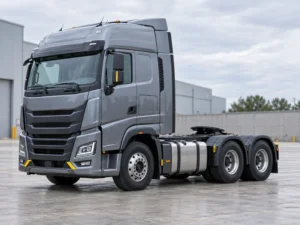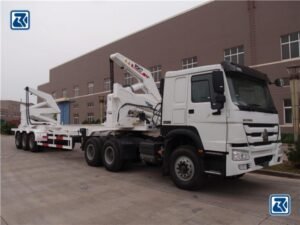
The fifth wheel height on a HOWO tractor is the distance from the ground to the top face of the fifth wheel plate, and it only works when it matches the trailer it will carry. There is no single universal figure to quote. The height shifts with the model, the suspension, the tires, and where the plate is mounted on the frame, so the practical question is never the raw number; it is whether this tractor’s saddle sits at the right height for the trailer’s kingpin. When a 4×2 or 6×4 HOWO prime mover does not sit at a height that suits the trailer, the combination can ride nose-up or nose-down, load the wrong axles, or fail to lock cleanly. This guide covers what the measurement means, why HOWO figures vary, how to match it to a trailer, how to verify the height at coupling, and how the combined height affects route clearance.
What Fifth Wheel Height Means on a HOWO Tractor
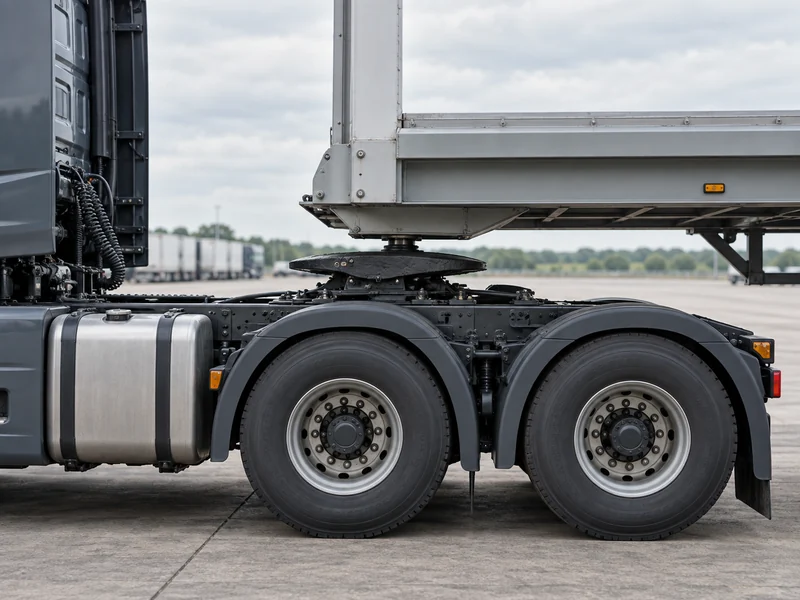
Fifth wheel height is a tractor-side measurement, taken from level ground up to the top surface of the fifth wheel — the “saddle” the trailer rests on. It is not the same as the trailer-side figure, which runs from the ground to the underside of the gooseneck at the coupler. The two numbers are meant to correspond, so the deck sits level once the kingpin drops into the jaws. Understanding how the fifth wheel and kingpin fit together keeps buyers from comparing a tractor spec against a trailer spec that was measured a different way.
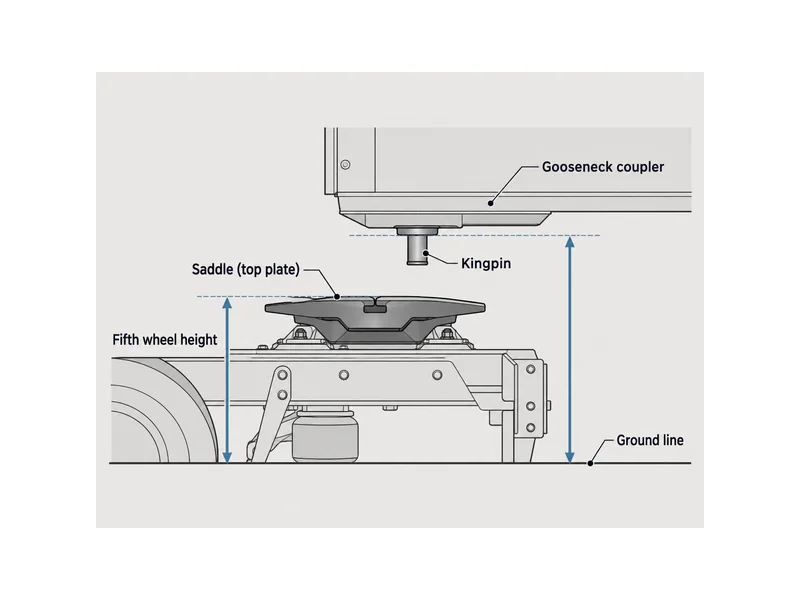
The reason the height matters is mechanical, not cosmetic. When the saddle and the trailer’s coupler height do not correspond, a lowbed or semi-trailer will not ride level. A saddle set too high pitches the trailer nose-up; one set too low pitches it nose-down and can drag the landing gear or nose. Either way the trailer sits at an angle, and the weight stops distributing the way the axle ratings assume, so load shifts between the drive axles and the trailer axles. Keeping the ride level is how operators keep that distribution under control.
Typical HOWO Tractor Fifth Wheel Height and What Shifts It
There is no fixed “HOWO fifth wheel height,” because the figure depends on the specific configuration, so any single number should be confirmed against the model’s own data plate. Some published figures for HOWO 4×2 tractor units put the saddle at roughly 1.3 m, but that is a starting reference, not a spec that carries across the range. A heavy-haulage chassis, a different suspension pack, or taller tires will move it, so treat a catalog height as a value to verify before you rely on it.
Several variables push the effective height up or down on the same tractor. Drive configuration is one of them: a HOWO 6X4 tractor truck set up for heavier work can sit on a different frame and suspension than a lighter 4×2. The actual height gap depends on the specific suspension pack and tires, so read it off each truck’s own data. Suspension type and ride height, tire size and wear, and the mounting position of the fifth wheel on the frame all move the number further. Where the design allows an adjustable or repositionable saddle, the height and fore-aft position can be changed within limits, but that range is set by the specific mounting and should be confirmed with the truck’s documentation, not assumed.
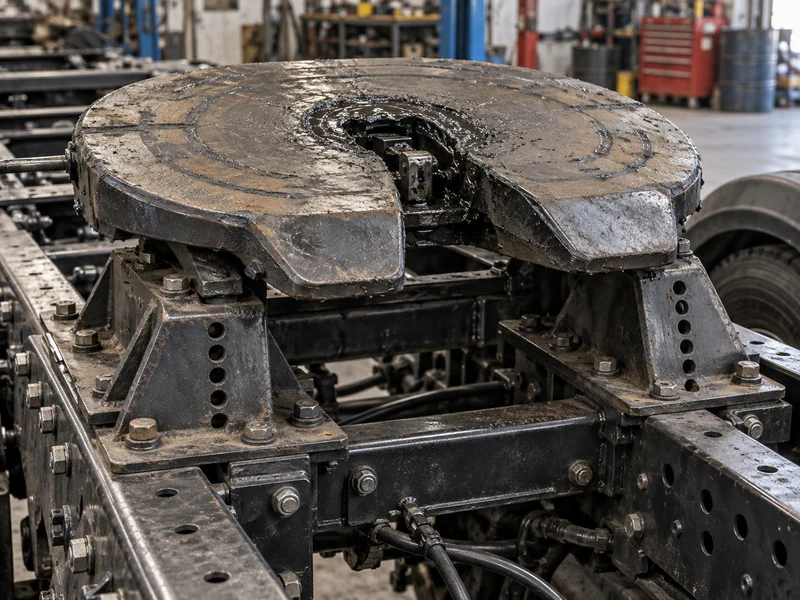
Because of this spread, the useful specification to pin down is the actual measured height of the tractor you intend to run, taken on level ground with the tires you will use. That measured value is what you compare against the trailer, and it is the number worth recording for a fleet that mixes trailers.
Matching the Fifth Wheel Height to Your Trailer’s Kingpin
Matching starts with measuring both ends on level pavement, because the tractor’s saddle height and the trailer’s coupler height only pair correctly when they are compared like-for-like. Measure the trailer’s kingpin or gooseneck coupler height unloaded on flat ground first, then measure the tractor’s saddle the same way. The target is for the loaded trailer to sit level once coupled. One published source puts the kingpin of an unloaded 53-foot dry van at roughly 47 to 49 inches off the ground, but that is a single reference for one trailer type. Heights vary, so measure your own trailer instead of borrowing a figure, especially for lowbeds and drop-decks that are built low on purpose.
Load changes the picture, so a match confirmed empty is not automatically a match under cargo. Suspension compresses as weight comes on, and that can shift the effective coupling height by half an inch or more depending on spring rates and load, which is enough to turn a level ride into a nose-down one. The discipline is simple: set the baseline unloaded on level ground, then re-check with a representative load before you commit to the height, not on one empty measurement alone.
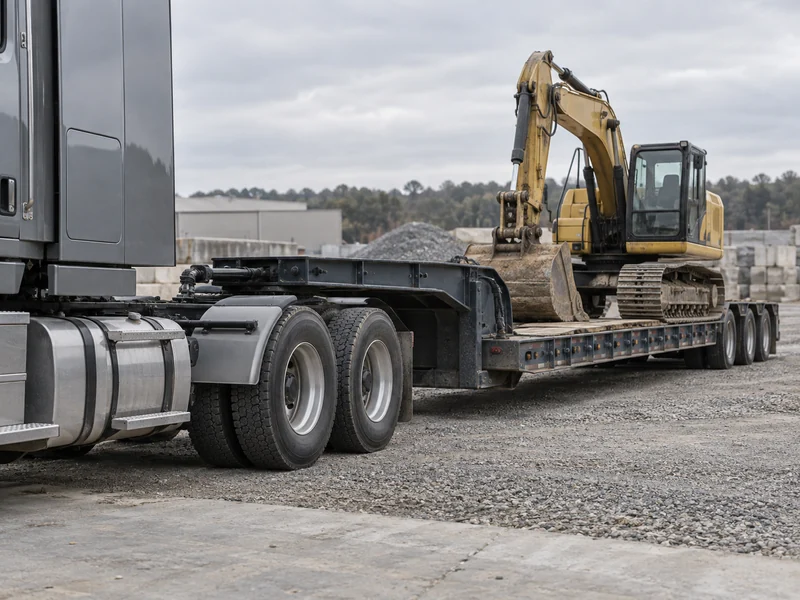
For lowbed work hauling excavators or loaders, the same matching logic decides whether the combination is even viable. A lowbed’s coupler sits low to keep the deck and loading height down, so the tractor saddle has to come down to meet it. If it cannot, the trailer rides nose-high, the kingpin load and axle weights move, and the deck angle changes the ramp and loading geometry. Confirm the saddle can reach the trailer’s coupler height before assuming a given tractor will pull a given lowbed.
Verifying the Correct Height When You Couple
You know the height is right at coupling when the fifth wheel plate contacts the trailer’s upper coupler plate and lifts the trailer slightly as the tractor backs under it. If the trailer is too low, raise it on the landing gear until the plate makes contact. If it is too high, the kingpin rides over the jaws instead of dropping in, and it will not lock. Backing under a trailer set far too low risks the tractor striking the trailer nose, and one set too high can catch the back of the cab. So the height check happens before the tractor is fully under the trailer, not after.
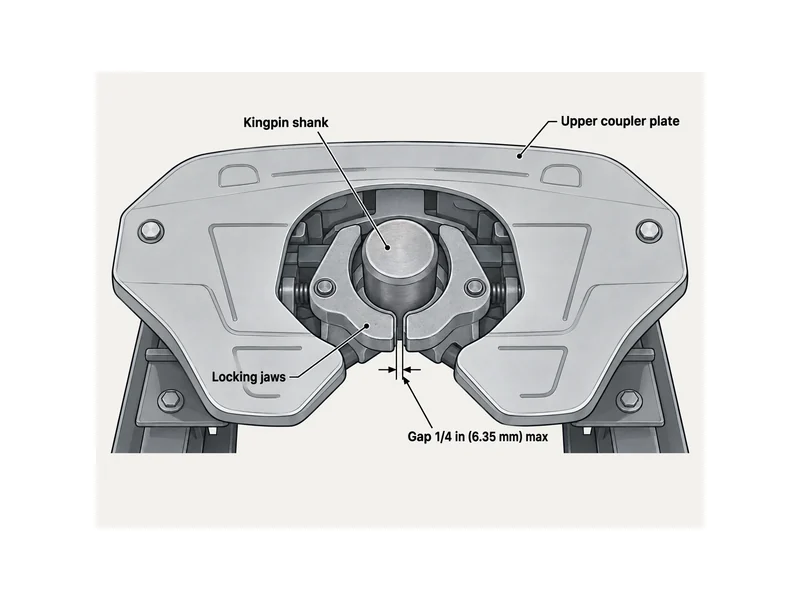
The lock itself is the final height-related acceptance check. According to fifth-wheel coupling procedures published by Heavy Duty Trucking, after coupling the jaws must close around the kingpin’s shank, not its head, with a visible gap of no more than 1/4 inch (6.35 mm) between the locked jaws. A larger gap, or jaws that have caught the head instead of the shank, points to a height or approach problem that has to be corrected before the combination moves. Treat the gap and jaw position as a go/no-go, not a formality.
Combined Height and Route Clearance
The saddle height also sets how tall the whole combination stands, so it is a clearance question as much as a coupling one. One export-market reference lists a HOWO tractor with a standard dry-van trailer at roughly 4.0 to 4.2 m overall, but that is one example combination, not a fixed figure. The real number follows from the saddle height plus the specific trailer and load, and it must be checked against the height limits on the intended route before you assume it is legal. A lower saddle lowers deck and overall height, which is often why lowbeds pair with lower coupling heights in the first place.
For operators running fixed lanes or crossing borders, the practical move is to work the height limit backward. Start from the lowest clearance on the route, subtract the trailer and cargo height, and use that to sanity-check whether the tractor’s saddle height and the trailer choice leave margin. A combination that rides level and locks cleanly can still be the wrong choice if it puts the load over a bridge or tunnel limit on the way.
Conclusion
Fifth wheel height is a matching constraint you resolve in order, not a spec to memorize. Start at the trailer end: measure the kingpin or gooseneck coupler height on level ground. Next, confirm the HOWO tractor’s actual saddle height and any adjustment range against the truck’s own documentation instead of a catalog number. Then verify the pair under a representative load, and again at the lock, where you check the jaws and gap against the applicable coupling procedure. That locked-jaw gap is a post-coupling acceptance check; it is not a saddle-height target you can preset. Run the three steps in that order and the combination rides level, loads the axles as intended, and stays under the route’s height limit. Skip the loaded re-check or the lock inspection and a saddle that looked right empty can still ride nose-down or fail to lock.
FAQ
What is the fifth wheel height on a HOWO tractor and how do I match it to my trailer?
The fifth wheel height is the ground-to-saddle-top measurement on the tractor. You match it by measuring your trailer’s kingpin or gooseneck coupler height on level ground and comparing the two, so the loaded trailer rides level. Because the HOWO figure shifts with model, suspension and tires, use the measured height of your actual truck instead of a single catalog number.
How do I know the trailer is at the correct height before I back under it?
The trailer is at the correct height when the fifth wheel plate contacts the upper coupler plate and lifts the trailer slightly as the tractor backs under it. If the plate does not make contact, raise the trailer on the landing gear. If the kingpin rides over the jaws instead of dropping in, the trailer is too high.
Is my HOWO tractor’s saddle height compatible with a lowbed trailer?
Your saddle height is compatible with a lowbed only if it can come down to the trailer’s lower coupler height so the deck rides level. Lowbeds are built low on purpose, so confirm the saddle height and any adjustment range against your specific tractor before assuming it will pull a given lowbed.
Will the wrong fifth wheel height put too much weight on the wrong axle?
Yes. A saddle that sits too high or too low tilts the trailer and shifts load between the drive axles and the trailer axles, which is why a level ride matters beyond appearance. Matching the heights keeps the weight distributing the way the axle ratings assume.
Does the fifth wheel height change once the trailer is loaded?
The effective coupling height changes because suspension compresses under load, and that shift can be half an inch or more depending on spring rates and weight. Set the baseline unloaded on level ground, then re-check with a representative load before finalizing the height.
Further Reading
- Fifth Wheel Coupling and Uncoupling Procedures — Heavy Duty Trucking (industry media). Supports the coupling-height acceptance checks, including the locked-jaw gap around the kingpin.
- Coupling and Uncoupling a Truck (Chapter 8) — ELDT / CDL training course. Supports the at-coupling height checks: backing under until the fifth wheel lifts the trailer and the jaws lock on the kingpin shank.
Related Articles
- HOWO 4X4 Dump Truck — The all-wheel-drive HOWO tipper built for rugged, low-traction sites where grip matters more than top payload.
- HOWO 4X2 Dump Truck — The lighter 4×2 tipper option for urban and short-haul construction loads.
- HOWO 6X4 Dump Truck — The common 6×4 tipper for short-distance bulk-material haulage on construction and water-conservancy sites.
- HOWO 6X6 Dump Truck — The off-road 6×6 tipper for construction and mining on tough terrain.
- HOWO 8X4 Dump Truck — The four-axle 8×4 tipper that spreads the heaviest loads for large-scale transport.