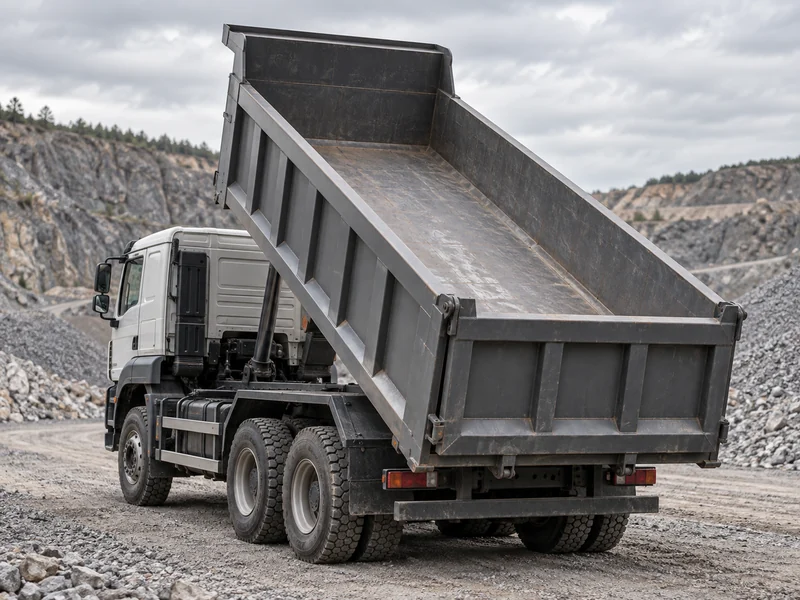
The body material on a HOWO dump truck is not one thing but a choice between structural steel and abrasion-resistant (AR) steel, made according to what the truck hauls. A bed that carries screened sand fails on different terms than one loaded with blasted rock, and the plate grade, its thickness, and where it sits in the body all follow from that difference. Across the HOWO dump trucks range, the cargo box is where most of that decision lives, because the chassis frame and the body answer to separate loads. This guide covers the material families used in dump bodies, the steel grades and hardness ranges you will see, how floor and side plate differ, and what to confirm before you commit to a build.
What HOWO Dump Truck Body Material Really Covers
“Body material” means the plate that forms the cargo box — floor, sidewalls, and tailgate. It comes from a short list of material families, each with a clear trade-off. Carbon and low-alloy structural steel is the long-standing default, valued mainly for cost and easy fabrication, though it relies on coatings and cleaning to hold off corrosion. Abrasion-resistant steel sits above it, trading price and workability for wear life under sliding and impact. Stainless steel and aluminum appear where corrosion resistance or weight savings outrank raw wear performance, which is why they show up more on winter service and road-salt work than on quarry haulers.
The frame and the body are not the same material decision, and conflating them is a common error. The chassis rails are built for bending and fatigue under the whole vehicle’s load, while the cargo box is built to survive the cargo itself — impact when material drops in, and abrasion as it slides out. A heavier or harder body does not make a truck stronger everywhere; it changes how the box wears and how much payload the truck can still legally carry.
Body geometry belongs to the same conversation as material. HOWO dump bodies commonly come in U-shaped (half-round) and square-sided profiles, and the shape affects how load slides and where wear concentrates. A half-round floor spreads sliding wear and self-centers the load, while a square box maximizes volume for lighter, bulkier material, so the right plate grade partly depends on the shape it is formed into.
Matching Body Material to the Load You Haul
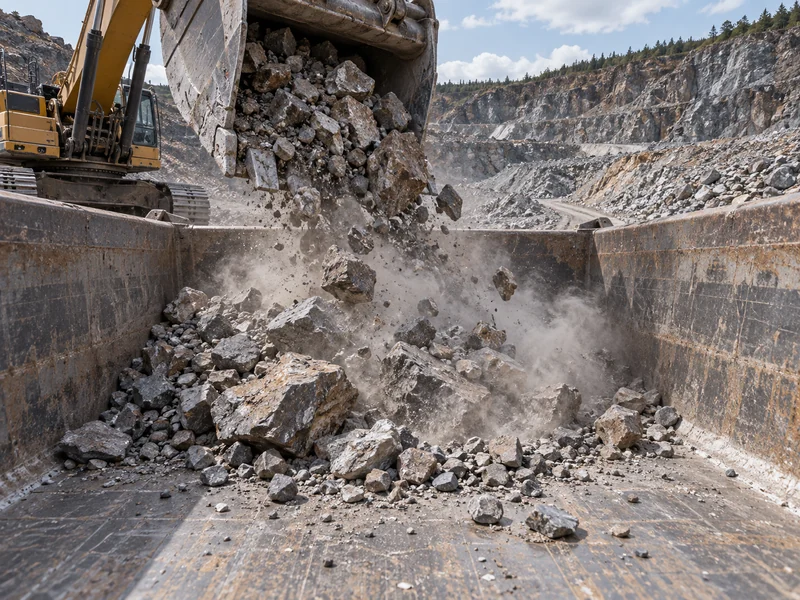
Start the material decision by naming the dominant wear mode of your cargo, because impact and abrasion push toward different steels. Loads made of large, sharp, or dense pieces — blasted rock, broken concrete, demolition debris — punish the body with impact and denting, and reward a tougher grade that resists cracking. Loads that are finer but constant — sand, gravel, ore fines, recycled aggregate — grind the floor through sliding abrasion, and reward a harder, more wear-resistant grade even if it is less forgiving to work with.
Mixed and unpredictable loads argue for toughness over maximum hardness, which is where the “harder is always better” assumption breaks down. Higher hardness buys abrasion resistance but reduces formability and impact toughness, so a very hard floor that meets a boulder can chip or crack where a tougher plate would only dent. The point is not to buy the hardest available steel but to match the grade to whether your material mostly wears the body or mostly hits it.
Corrosive and sticky materials change the calculation again. Salt, wet fill, and some industrial by-products attack ordinary carbon steel, and operators hauling them often move to a more corrosion-tolerant body or accept a strict coating-and-cleaning regime. That is a maintenance decision as much as a metallurgical one: the cheaper plate can win on purchase price and lose on relining and downtime over the body’s life.
| Dominant wear mode | Typical cargo | Material direction |
|---|---|---|
| Heavy impact | Blasted rock, broken concrete, demolition debris | Tougher AR grade; prioritize impact resistance over peak hardness |
| Sliding abrasion | Sand, gravel, ore fines, recycled aggregate | Harder AR grade for wear life; accept reduced formability |
| Corrosion / sticky | Salt, wet fill, corrosive by-products | Corrosion-tolerant body or disciplined coating and cleaning |
| Light, bulky, low-abrasion | Mulch, light demolition, general fill | Cost-led carbon/structural steel, larger volume |
Steel Grades and Hardness You’ll See in Dump Bodies
Dump body steel is usually graded one of two ways: by an abrasion-resistant class or by a hardness number. Either figure maps directly to the impact-versus-abrasion choice above. AR400, AR450, and AR500 are the common designations, with the number tracking nominal Brinell hardness. AR400 wear plate typically runs about 360–440 HBW with high impact resistance, which is why it is a frequent choice for dump beds that take a beating during loading. AR500 is harder, roughly 477–550 HBW, with better abrasion resistance but more brittleness and a greater tendency to need pre-heating before welding. As hardness climbs, wear life improves while formability and weld-friendliness fall, a single trade-off that explains most grade decisions.
Structural steel still does real work in the body, usually beneath the wear surface. Many bodies pair a wear-resistant floor or liner with a low-alloy structural steel substructure for the frame, crossmembers, and sometimes the upper sides, where impact and abrasion are lower. Where a specific structural grade is quoted, confirm it against the build sheet — the substructure and the wear surface are chosen for different jobs, so one grade rarely runs through the whole box.
Where Each Grade Belongs: Floor, Sides, and Thickness
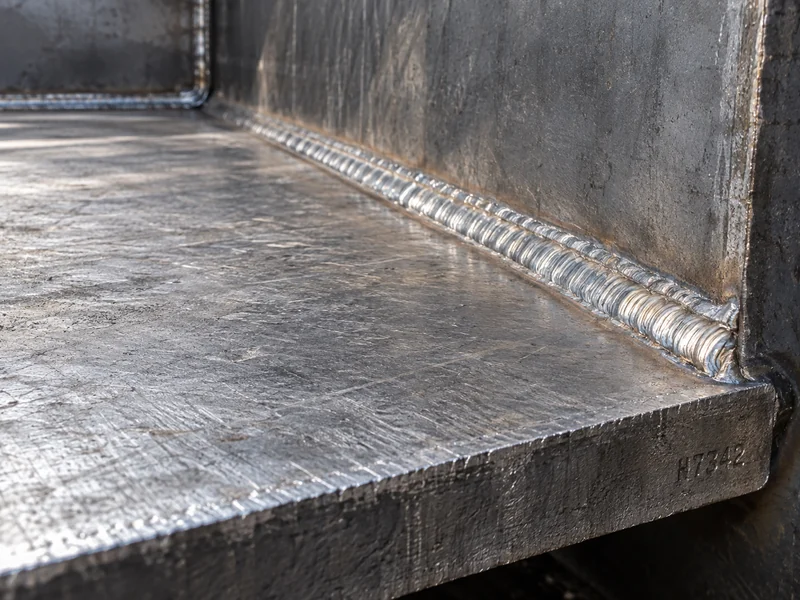
The floor, sides, and tailgate rarely need the same steel. Treating the body as one uniform plate wastes either money or wear life. The floor and the lower rear take the worst of both impact and sliding wear, so they justify the toughest and often thickest plate; the upper sidewalls see far less and can use a lighter or lower grade. A sensible spec asks whether the same grade runs through the sidewalls and tailgate, and what plate thickness the manufacturer quotes for each. A body advertised on its floor plate alone can hide thin sides.
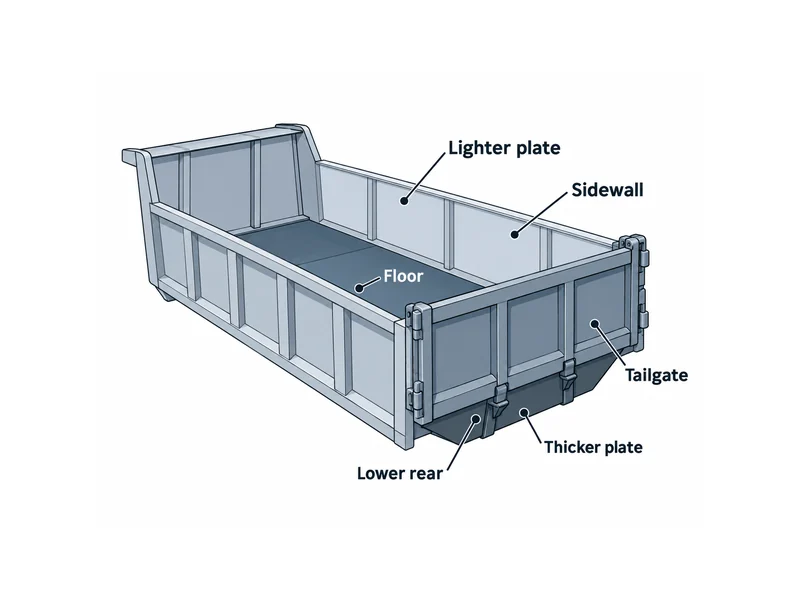
Plate thickness is where material choice meets payload, because every millimeter of steel is weight the truck carries instead of cargo. Thicker floor plate resists impact and lasts longer, but it raises the body’s own mass and cuts into legal payload. A harder grade can sometimes deliver the same wear life in a thinner, lighter plate, which is part of the argument for AR steel over plain carbon steel. Published figures vary by model and configuration: one heavy 8×4 build, for example, is listed with a 10 mm floor and 8 mm sides at about 28.5 m³ — treat that as one configuration, not a HOWO-wide standard. Confirming the HOWO dump truck dimensions for your intended axle layout helps tie the plate spec to the volume and body size you need.
Weldability and repair cost belong in the thickness decision, not as an afterthought. Softer AR grades such as AR400 are compatible with common low-hydrogen welding practice and generally need pre-heat only above roughly 0.75 in thickness. Harder grades demand more careful procedures and pre-heating that raise the cost of every future patch and reline. A body you can repair in your own shop has a different lifetime cost than one that must go out for specialist welding, and that difference feeds directly into what moves the price of the finished truck.
How to Verify a HOWO Dump Body Before You Commit
Verify the body spec against your load before you order; a headline material claim is not enough on its own. Grade, thickness, geometry, weld design, and expected impact behave as one system, so a single impressive number tells you little in isolation. The checks below turn a vague “abrasion-resistant body” into something you can compare between builds.
- Ask for the plate grade and hardness by body zone — floor, sides, tailgate — not one figure for the whole box.
- Confirm floor and side plate thickness in millimeters for your exact model and configuration, since these vary between builds.
- Match the grade to your dominant wear mode: toughness for impact-heavy loads, hardness for sliding abrasion.
- Check weldability and pre-heat requirements against your own repair capability, because harder plate costs more to reline.
- Where corrosion applies, confirm the coating or material strategy, not just the base steel.
Treat any performance percentage or wear-life claim as conditional on the test behind it. Manufacturer figures such as extended wear life are typically comparisons within one product range and one wear scenario, and they may not hold for your material or loading method. When a supplier cannot state the grade and thickness by zone, that is itself information about how the body was specified.
Bottom Line on HOWO Dump Truck Body Material
Choosing HOWO dump truck body material is a matter of order, not of finding one “best” steel. First name the dominant wear mode of your load — impact from sharp, heavy pieces, or sliding abrasion from finer material — because that single distinction points you toward a tougher or a harder grade. Then let the body zones and plate thickness follow: put the strongest plate in the floor and lower rear, allow lighter steel in the upper sides, and read thickness as a payload and repair-cost decision, not a bragging number. The most common way buyers get this wrong is reaching for maximum hardness and losing impact toughness, or comparing bodies on a floor-plate figure that hides thin sides and an unstated grade. Fix the wear mode first, confirm grade and thickness by zone, and the rest of the body-material choice becomes a specification you can verify instead of a claim you have to trust.
FAQ
What steel grade should I choose for a HOWO dump truck body if I mostly haul sharp rock?
Sharp, heavy rock loads the body with impact, so the material choice leans toward a tougher grade — an AR class chosen for impact resistance over peak hardness — because a very hard plate can crack where a tougher one only dents. HOWO bodies are built from a short list of materials (carbon or low-alloy structural steel, abrasion-resistant steel, sometimes stainless or aluminum), and the exact grade should be confirmed on the build sheet, not assumed, since fetched HOWO listings often state thickness without naming the plate grade.
Is AR400 or AR500 better for a dump bed?
AR400 is generally the better choice where the bed takes heavy impact during loading, because it is tougher and more forgiving, while AR500 suits sliding-abrasion service where wear life matters more than impact. AR400 typically runs about 360–440 HBW with high impact resistance; AR500 is harder at roughly 477–550 HBW but more brittle and harder to weld, so pick by whether your material mostly hits the body or mostly grinds it.
How thick is a HOWO dump truck floor plate?
Floor plate thickness varies by model and configuration, so there is no single HOWO figure. One heavy 8×4 build, for example, is listed with a 10 mm floor and 8 mm sides at about 28.5 m³ — treat that as one configuration, not a HOWO-wide spec — and you should confirm the exact numbers by zone for your intended axle layout before ordering.
Is carbon steel enough, or do I need abrasion-resistant steel?
Carbon or structural steel can be enough for lighter, low-abrasion loads and cost-led builds, but sliding-abrasion or high-impact cargo usually justifies AR steel for longer wear life. The trade-off is upfront price and workability against relining frequency and downtime over the body’s life, so the decision is as much about maintenance cost as metallurgy.
Will a harder steel body be harder to weld and repair?
Yes. As hardness increases, weldability and formability generally decrease, and harder plate more often requires pre-heating and careful procedure. Softer AR grades like AR400 work with common low-hydrogen welding and typically need pre-heat only above roughly 0.75 in thickness, so a body you can repair in-house has a lower lifetime cost than one needing specialist welding for every patch.
Further Reading
- Wear-plate dump truck bodies, liners and tail gates — steel maker reference (T2/T3). Backs the AR grade hardness bands and the floor/sides/tail-liner zoning discussed above.
- AR400 wear plate: properties, uses and weldability — steel supplier reference (T2/T3). Supports the AR400 hardness range, high impact resistance and low-hydrogen welding / pre-heat points.