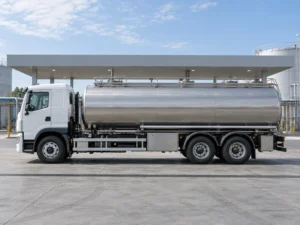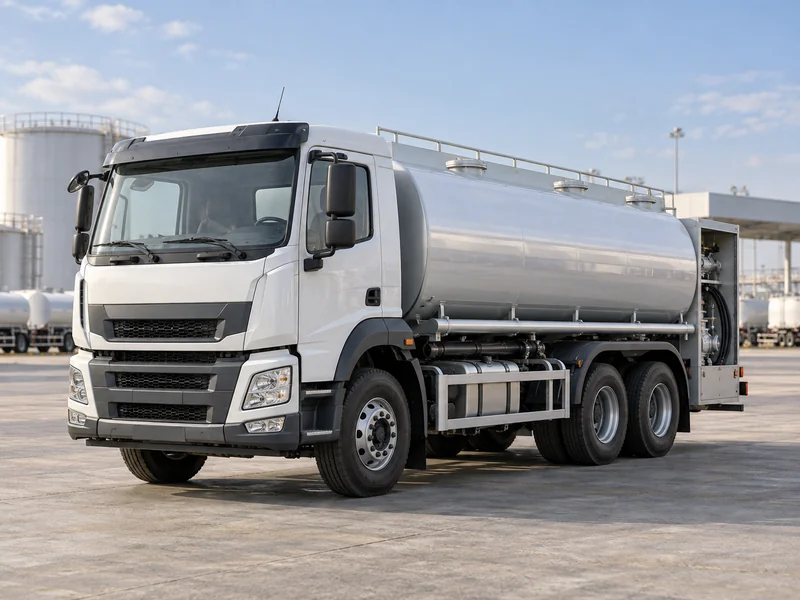
A HOWO tanker truck price is a range, not a single sticker, and advertised figures for the same nominal capacity can differ by tens of thousands of dollars. The number moves with tank capacity, chassis configuration, tank material, dispensing and safety fittings, and whether the quote is a bare factory price or a delivered, compliant unit. Supplier listings for a common 20,000-liter 6×4 fuel model tend to cluster in a broad band. Smaller 4×2 units sit lower and fully equipped 8×4 tankers sit well above, so any figure only means something once the configuration behind it is fixed. This article breaks the price into the variables you can actually control, so you can compare a quote instead of guessing at it.
What a HOWO tanker truck price actually covers
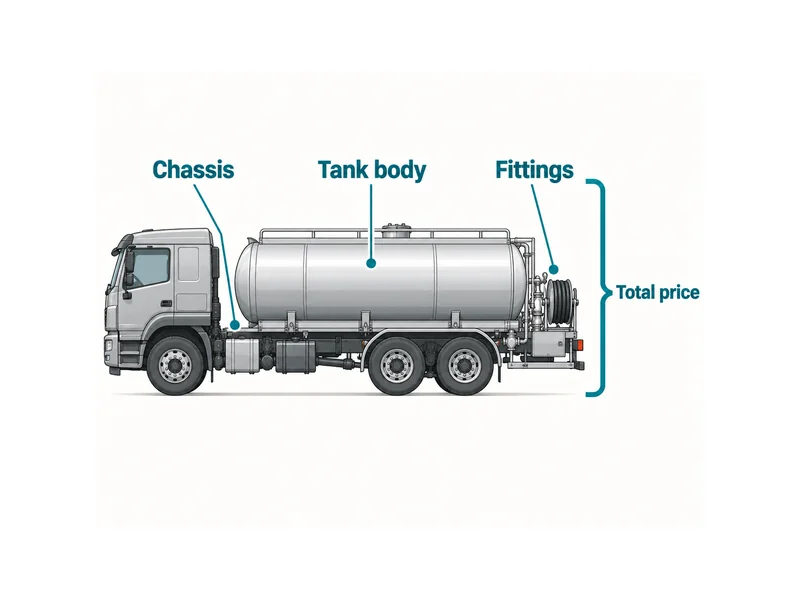
A quoted HOWO tanker price usually bundles three cost blocks, and two quotes are only comparable when all three match. The chassis (engine, axles, transmission, cab), the tank body (material, capacity, compartments), and the dispensing and safety fittings each carry their own cost. A low headline number often means one of the three was specified thinner. Before comparing sellers, confirm that the capacity, drive layout, and fitting list are the same on both quotes.
Tank duty changes the build before it changes the price, so decide the cargo first. A fuel or diesel tanker is typically built with vapor and static-discharge controls and a dispensing system, while a water tanker truck is a simpler build without those fuel-handling fittings. With fewer fittings to buy, a water unit usually prices lower for the same volume. Mixing up the two when reading a price is one of the fastest ways to misjudge a budget.
Most sellers quote a factory or FOB price for a HOWO road tanker, which is the number before freight, duties, and any local compliance work. That FOB figure is useful for comparing configurations against each other, but it is not the price you pay to put the truck into service. Treat the advertised price as the starting line and keep the delivered-cost items (covered further down) in a separate column.
HOWO tanker truck price by capacity and chassis
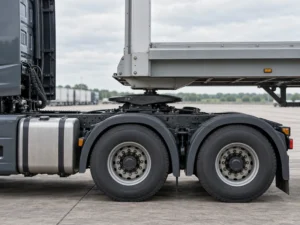
Capacity and drive layout set the price tier before you choose any other option, so locate your volume first. HOWO fuel tankers are commonly offered on 4×2, 6×4, and 8×4 chassis, and each layout maps to a typical capacity band and engine range. Larger volume means a heavier chassis, more axles, and more engine power, and all three push the price up together, not one lever at a time.
The table below shows how configurations typically line up. Treat the price column as relative positioning, not a quote, because advertised figures shift with specification, condition, and the seller.
| Configuration | Typical tank capacity | Typical engine power | Price positioning |
|---|---|---|---|
| 4×2 | ~10,000–15,000 L | lower power band | Entry level |
| 6×4 | ~20,000–30,000 L | mid power band | Most common / mid |
| 8×4 | ~35,000–45,000 L | high power band | Top of the range |
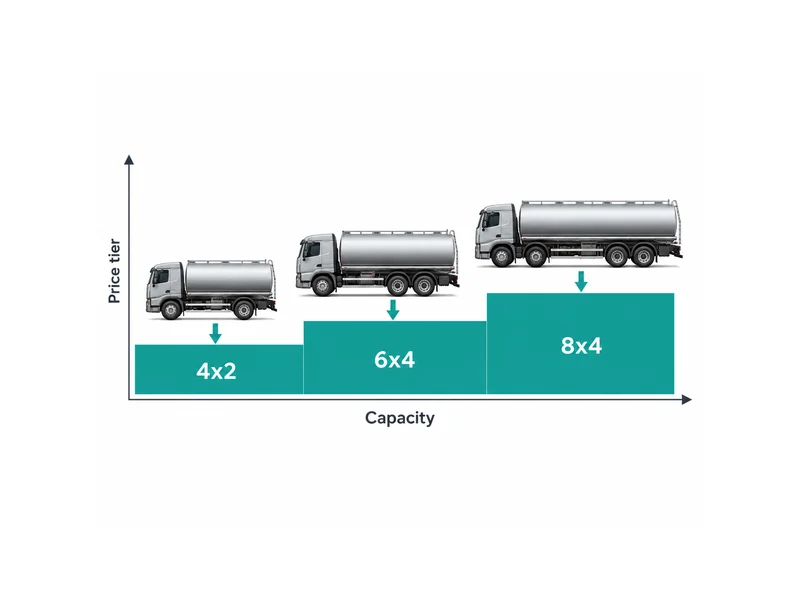
The 6×4 in the 20,000–25,000-liter range is one of the most commonly quoted configurations. It balances payload against the axle-load limits that cap what a truck can legally carry in many markets. Axle count and capacity are the largest single levers on the base price, so moving up one layout for extra volume shifts the number more than any single option does. Match the layout to the volume you actually haul, not to capacity you will rarely fill.
Configuration variables that move the price
Tank material is one of the clearest price levers, and the choice follows the cargo, not the budget. Carbon-steel tanks are the standard, lower-cost option, while aluminum-alloy tanks cost more but weigh less. Where axle-load limits cap your payload, a lighter tank can let you carry more per legal trip, and that extra payload may justify the higher purchase price on operating economics. Where it does not, carbon steel is usually the cheaper, sensible default. Confirm which material a quote assumes before comparing prices.
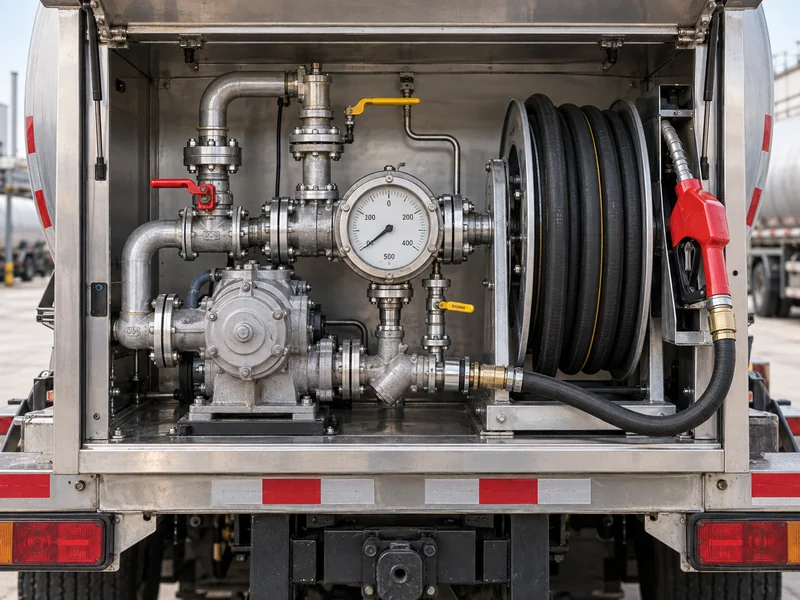
Compartments, pump, and metering add cost in proportion to how the truck earns its money. A single-compartment tank is cheaper than a multi-compartment build, but splitting the tank lets one truck carry different grades or make split deliveries, which changes its commercial value. Pump flow rate and whether the quote includes a calibrated flow meter, hose reel, and dispensing nozzle all move the number too, so a “cheaper” tanker may simply have left the dispensing package off. Ask for the fitting list line by line, then confirm the pump and metering match how you will load and unload.
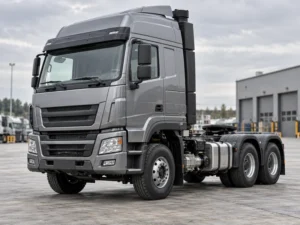
Emission standard and chassis specification set a floor under the price and a ceiling on where the truck can operate. Engine power, emission tier, transmission, and cab grade all shift the chassis cost, and the emission tier can also affect where a truck can legally register and operate. Verify the emission level against your destination’s own import and registration rules before treating a low quote as a bargain, because a unit you cannot register is not actually cheaper.
Costs beyond the truck price
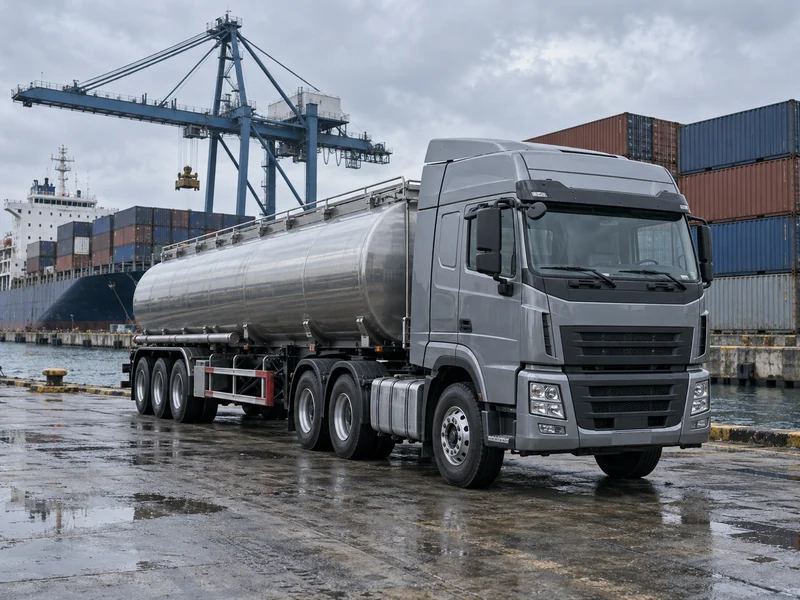
The advertised price is only part of the delivered cost, so budget the landed total, not the FOB number alone. For export buyers, ocean freight, insurance, duties, and port handling are separate line items that can add materially to a factory quote. Their size depends on the destination and lane, not on the truck itself. Build these into the comparison from the start, so a low FOB quote to a distant port does not look better than it is.
When the base unit does not match local rules, conversion and refurbishment work carries its own add-on cost. On used and export-oriented units in particular, items such as right-hand-drive conversion, a remanufactured or upgraded engine, and market-specific compliance work are often quoted as separate extras on top of the base tanker. Where these apply, ask for them itemized, since they are easier to compare as separate figures than buried in one delivered price. If a quote is silent on conversion or compliance, assume it is excluded until confirmed.
New versus used HOWO tanker trucks
New and used HOWO tankers answer different budget questions, so choose against your utilization, not only the price gap. A used or refurbished unit lowers the entry price and can suit lighter duty cycles or tighter budgets. A new build gives you a current-standard emission spec, a stronger warranty position, and a configuration built exactly to order. The trade is the upfront saving against remaining service life and the risk of older running gear.
On a used tanker, condition tiers matter more than the headline number. Chassis year, engine condition, and whether the engine has been remanufactured drive both the price and the value. A slightly higher price for a rebuilt engine or newer chassis can be cheaper over the truck’s remaining life. When comparing used quotes, line up chassis year and engine status first, then compare price; comparing price alone across unknown conditions tells you very little.
Warranty, parts, and after-sales in the price
A quote also prices what happens after delivery, so read warranty and parts support as part of the number, not a bonus. Two tankers at similar headline prices can diverge once you factor in the warranty terms, whether common wear parts are stocked or shipped for your model, and how service or claims are handled across borders. For a truck that runs daily, thin parts support can quietly raise the real cost of ownership even when the purchase price looked lower. Ask what the warranty covers and for how long, confirm parts availability for your exact model, and check who handles service in your market before comparing on price alone.
Building a realistic HOWO tanker budget
Two things are worth pinning down first: the exact configuration and the quote basis. Almost all of the price spread traces back to those. Fix your capacity, chassis layout, tank material, and fitting list. Then decide whether you are budgeting an FOB factory price or a delivered, road-ready unit, and hold every quote to that one definition. Once you lock configuration and basis, the remaining uncertainty sits mostly in freight to your port and any conversion or compliance work, so confirm those line items before you commit. A HOWO tanker is priced correctly when you can name what the number includes and what still has to be added. To turn a range into a configuration-specific figure, specify your target capacity, drive layout, tank material, emission requirement, and delivery destination when you request a quote.
FAQ
How much does a HOWO fuel tanker truck cost?
A HOWO fuel tanker’s cost depends on capacity, chassis layout, tank material, and fittings, so it is best read as a range that widens with size, not a single price. Smaller 4×2 units sit at the entry end, mid-size 6×4 tankers in the middle, and large 8×4 builds at the top. Delivered cost adds freight and any compliance work on top of the factory figure. Fix the configuration first, then ask for a quote against that exact spec.
What makes one HOWO tanker truck more expensive than another?
The largest price differences come from capacity and chassis layout, followed by tank material, compartment count, and the dispensing and safety package. A larger 8×4 with an aluminum multi-compartment tank and a full pump-and-meter package will sit well above a basic single-compartment 4×2, even from the same maker. Comparing prices only works when these variables match on both quotes.
Is a used HOWO tanker truck worth it?
A used HOWO tanker can be worth it when the duty cycle is moderate and the chassis and engine condition are verified, since it lowers the entry price against a shorter remaining service life. The deciding factors are chassis year, engine condition, and whether the engine was remanufactured, not the sticker price alone. Compare used units on condition tier first, then on price.
What extra costs should I budget beyond the truck price?
Beyond the factory or FOB figure, budget ocean freight, insurance, duties, and port handling, which vary with your destination and shipping lane. On used or export-oriented units, right-hand-drive conversion, engine remanufacturing, and market-specific compliance work are often quoted as separate extras. Ask for these itemized, and treat any quote that is silent on them as excluding them until confirmed.
Further Reading
- HOWO fuel tanker models and configuration overview — supplier reference covering the capacity-and-chassis tiers and the material, pump, and compartment options discussed above; its figures are supplier-set and time-sensitive, so read them as configuration-dependent, not current quotes.
- HOWO fuel tank truck capacity and pricing notes — supplier reference with a capacity range and a buyer FAQ; use it for the variables behind a price, and treat any figure as an indicative, configuration-dependent range.
Related Articles
- HOWO 4X4 Dump Truck — Covers the 4×4 all-wheel-drive HOWO dump configuration for off-road and low-traction sites, useful if you are weighing drive layout across HOWO bodies.
- HOWO 6X6 Dump Truck — Explains the 6×6 all-wheel-drive dump setup for heavy off-road haulage, a reference point for how added driven axles change capability and cost.
- HOWO 4X2 Dump Truck — Details the lighter 4×2 dump layout for on-road, lower-volume work, paralleling the entry-tier chassis logic discussed here.
- HOWO 6X4 Dump Truck — Breaks down the common 6×4 dump configuration, the same mid-tier layout that anchors much of the tanker pricing above.