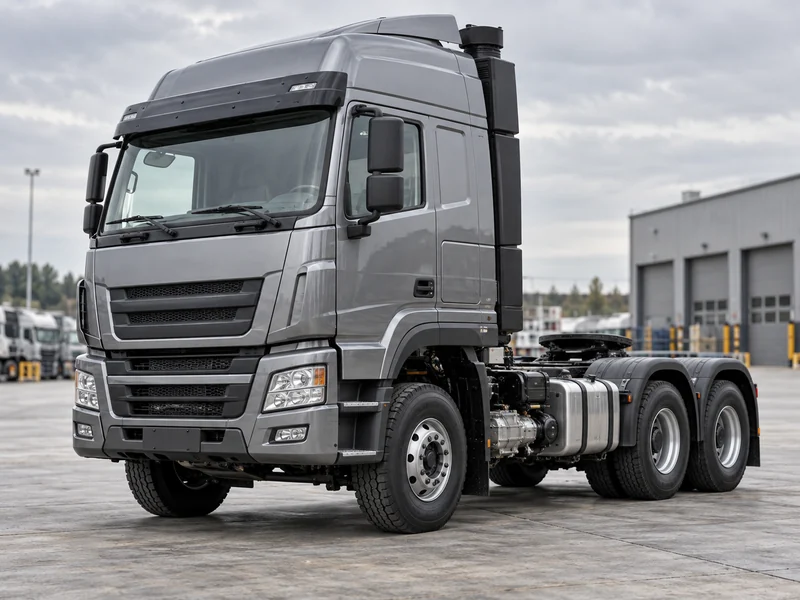
HOWO tractor trucks run Sinotruk’s own HW-series gearboxes in gear counts from 9 up to 16, plus an automated manual (AMT). Which one belongs on a given truck follows from engine torque, load, and terrain, not from a “more gears is better” instinct. A 10-speed box such as the HW19710 is a common line-haul unit; 12-speed variants, 16-speed boxes, and the AMT show up as torque and grades climb.
Getting the gearbox right splits into three questions: which HW model is actually fitted, how its range and splitter shifting work, and what oil and service interval that model needs. The gearbox has to match the rest of the HOWO tractor unit — engine torque, axle ratio, and duty cycle. Confirm the model on the build sheet before you order parts or plan a rebuild. This article covers the transmission itself; clutch overhaul steps and full driveline matching such as axle ratios and PTO plumbing are separate topics.
HW-Series Gearboxes Used in HOWO Tractors
Sinotruk builds the HW-series gearbox for both HOWO and SITRAK tractors. The family spans 10-, 12-, and 16-speed manuals plus an AMT variant, so the first job is reading which unit sits in your truck. The HW19710, for example, is a 10-speed rated at about 1,900 Nm of input torque. Sixteen-speed units like the HW19716 and the HW20716A AMT sit at the heavier end.
| Gearbox | Forward speeds | What the model pages document |
|---|---|---|
| HW19710 | 10 (+2 reverse) | ~1,900 Nm rated input torque; ~12 L oil fill |
| HW18710 | 10 (+2 reverse) | Twin-countershaft main box + planetary range section; listed for ~336–420 hp engines |
| HW19716 | 16 | High/low split on each gear position (finer ratio steps) |
| HW20716A | 16, automated (AMT) | TCU-managed shifting with manual override |
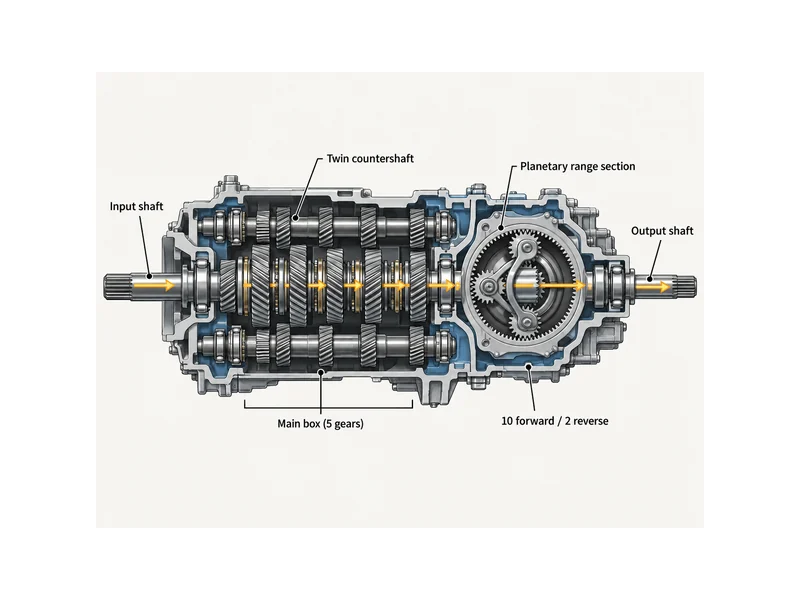
Across the family, published input-torque ratings run roughly 1,900–2,500 Nm depending on model, so match a box to your engine’s output, not to a headline gear count. The HW18710 shows how the layout works: a main box with five forward gears on a twin-countershaft design, plus a planetary auxiliary (range) section that doubles them into 10 forward and 2 reverse gears. Its model page lists it for engines in the 336–420 hp band, which is why the exact model on the build sheet, not the family name, tells you what a box can take. Before buying service parts, confirm the fitted gearbox from its nameplate or part number, because oil specification and internal parts differ from model to model.
Matching Gear Count and Type to Your Haul
Gear count should track your torque, gross combination weight, and terrain, not a bigger-is-better reflex. A 10-speed HW-series box suits standard highway line-haul. Step up to a 12-speed as torque and GCW climb, and to a 16-speed when you are pulling grades or running loaded off pavement, where finer ratio splits keep the engine in its powerband.
The spread between low and top gear is what makes the extra speeds useful. On the HW19710, the parts catalog lists first gear at about 14:1 and top gear as direct (1:1) — a span wide enough to crawl a loaded start and still cruise. A 16-speed narrows the steps between those extremes for grade work. Standard line-haul on a HOWO 6×4 tractor truck pairs well with a 10-speed, while hillier, heavier routes are where the extra ratios earn their keep.
Choose AMT when driver consistency matters more than the lowest purchase price. An automated manual such as the HW20716A uses a TCU to handle shifts or hand control back to the driver, which helps standardize shifting across a mixed pool of drivers. A straight manual stays cheaper to buy and simpler to service.

Range and Splitter Shifting on HOWO Gearboxes
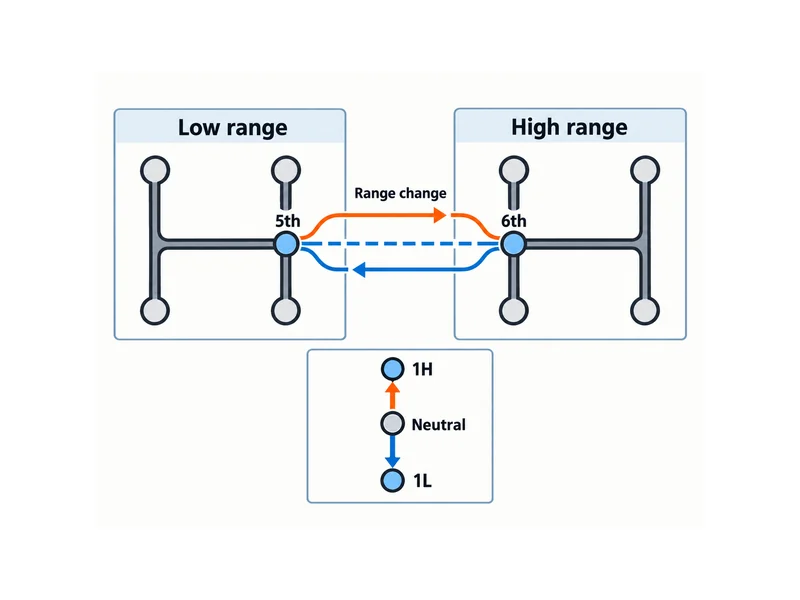
Know where your HOWO box changes range before you push it hard, because the low-to-high crossover is where most shifting mistakes happen. On a 10-speed the crossover from low to high range falls between 5th and 6th gear; on a 12-speed it moves to between 6th and 7th.
Treat that change as a deliberate shift, not a quick flick. Crossing into the range section is what rushing or gear-jumping chews up first, showing as a notchy or grinding shift long before it shows as a failure. As a working limit, do not force a high-to-low range change above about 30 km/h. Keep shifts near the typical 1,500–2,000 rpm window so short-shifting or over-revving does not fight the synchros.
Sixteen-speed boxes add a second neutral plane and a high/low split on each gear position, labelled like 1H and 1L. A move such as 4H to 5L then routes through neutral instead of straight across. That structure gives grade drivers finer control, but it also means more for a new driver to learn before shifts turn smooth.
Transmission Oil, Service, and Replacement Costs
Match the oil to the exact HW model, not to a generic chart. Grade, fill volume, and change interval are all model-specific, so read them from that unit’s manual. Sinotruk’s HW18710 sheet, for example, specifies an API GL-5 gear oil and about a 12-litre fill (roughly 12.5 L with a power take-off), and the HW19710 catalog lists a similar 12-litre capacity. The SAE grade is less settled — the same boxes appear at both 85W/90 and 75W-90 — so confirm the viscosity from your own manual.
Follow the model’s service schedule, and read the oil, not just the calendar. On the HW18710 the first change comes early, roughly 2,000–5,000 km to flush break-in debris, then periodic checks near every 10,000 km, with a full change on the interval the manual sets; published figures for these boxes vary between about 50,000 and 60,000 km. The same HW18710 sheet bounds operating temperature at roughly -40°C to 120°C, so cold-start warm-up and watching for run-hot symptoms both matter. Dark or burnt-smelling oil on a check is a reason to change it and look further, since contaminated oil can mask the real wear pattern.
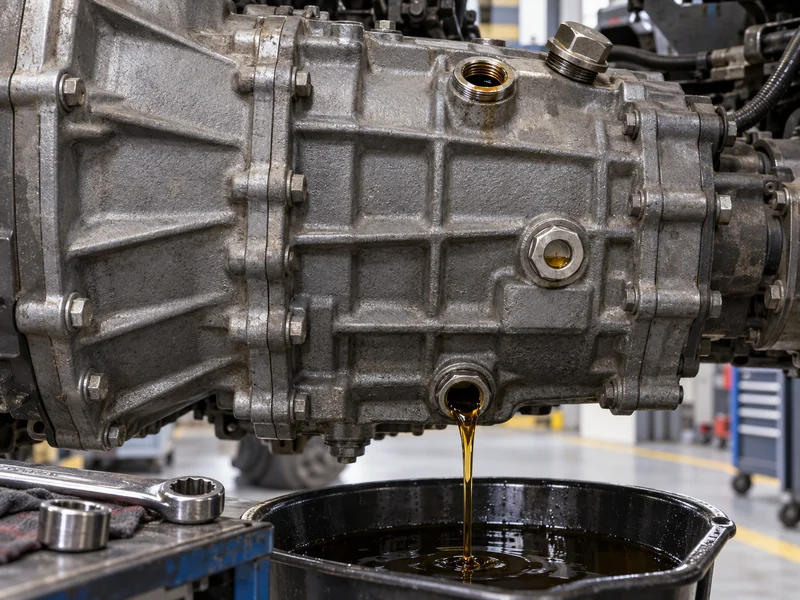
Keep the fill to the model’s specified level. Both underfilling and overfilling can cause trouble, so check the level against the manual instead of topping up on a guess; treat a persistent leak as a temperature or seal issue to diagnose, not as a routine refill.
Replacement cost is driven mostly by which unit you fit, not by the hours to fit it. A remanufactured gearbox typically sits below a new OEM unit, and a used box lower still but with more risk; labour scales with how long the swap takes and whether the clutch is replaced while the box is out. Those ranges come from a single non-official source and shift with model, parts source, region, and shop rate, so get a model-specific quote against your torque rating — a 16-speed or AMT unit will not price like a basic 10-speed.
Bottom Line on HOWO Gearboxes
Start from torque and terrain, then confirm the exact HW model before you touch parts or budgets. Match gear count to your engine and route — a 10-speed for standard line-haul, a 12- or 16-speed as torque and grades climb, an AMT when driver consistency matters — and let the fitted model, not a generic chart, set oil grade, fill volume, and change interval. The step most often skipped is verifying which gearbox is actually in the truck, because oil spec, service parts, and rebuild cost all follow from that one fact.
FAQ
How many gears does a HOWO tractor truck transmission have?
Most HOWO tractor gearboxes are 10- or 12-speed, with 16-speed and AMT options for heavier duty. The HW-series is offered from 9 up to 16 forward speeds; a 10-speed such as the HW19710 (10 forward, 2 reverse) is common on standard line-haul tractors.
Should I choose a manual or AMT HOWO transmission for long-haul?
Pick AMT when driver consistency matters more than purchase price. An automated manual like the HW20716A shifts automatically or on demand through its TCU and helps standardize a mixed pool of drivers, while a straight manual is cheaper to buy and simpler to service.
What oil does a HOWO HW19710 gearbox use, and how much?
The HW19710 catalog lists a fill of about 12 litres. For grade, HOWO’s model documentation specifies an API GL-5 gear oil — the HW18710 sheet lists GL-5 — but confirm the SAE viscosity from your own unit’s manual, since sources give both 85W/90 and 75W-90.
When does a HOWO 10-speed shift from low to high range?
On a 10-speed HW-series box, the range changes between 5th and 6th gear. Treat it as a deliberate shift, avoid gear-jumping, and do not force a high-to-low range change above roughly 30 km/h.
How much does it cost to replace a HOWO truck transmission?
Replacement cost depends on the unit you fit (new, remanufactured, or used), the labour hours, and your region and shop rate, so treat any single figure as a starting point, not a quote. Published ranges come from a single non-official source and vary widely; get a model-specific quote against your torque rating, since a 16-speed or AMT unit prices above a basic 10-speed.
Further Reading
- SINOTRUK HW18710 gearbox technical instructions — manufacturer technical page for the HW18710; supports the two-section structure, oil grade and capacity, and temperature limits cited above. Verify figures against your own unit’s manual.
- HW19710 transmission specifications catalog — parts-catalog spec sheet; supports the HW19710 gear count, input-torque rating, and gear-ratio spread.