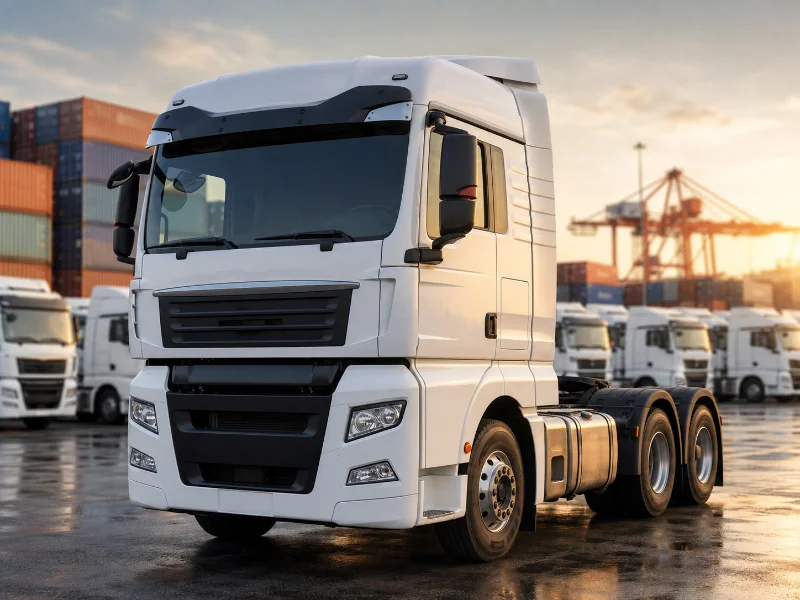
SITRAK truck prices sit in a wide band, because the badge covers very different machines. SITRAK, Sinotruk’s premium heavy-duty brand, ships in many forms. A used 6×4 tractor head and a new Euro VI AMT prime mover share a name, but little else on the invoice. As a Chinese heavy-truck exporter, we quote SITRAK units every week. The first thing we tell buyers is simple: there is no single “SITRAK price.” There is only a price for a specific model, drivetrain, emission tier, and condition, shipped to a given market. This guide breaks down what moves that number, so you can read a quote the way we build one.
What a SITRAK Truck Actually Costs
A SITRAK truck’s export price depends mostly on four things: model generation, drivetrain, emission tier, and whether the unit is new or used. No fixed list price travels across markets, because the same model leaves the factory in many specifications.
The table below shows observed export listing ranges, not factory pricing. It shows how configuration and condition move the number:
Observed Export Listing Ranges (June 2026)
| Configuration | Condition | Typical emission tier | Indicative FOB China price (USD) |
|---|---|---|---|
| 6×4 tractor or dump, serviceable | Used | Euro II–IV | ~10,000–29,000 |
| 4×2 / entry tractor | New | Euro III–V | ~30,000–45,000 |
| 6×4 tractor, mid-spec (C7H / G7) | New | Euro V | ~40,000–55,000 |
| 6×4 / 8×4 high-spec (G7S, AMT) | New | Euro V–VI | ~55,000–70,000 |
Ranges come from public export and dealer listings, quoted FOB China, and exclude freight, duties, and local compliance. They are not factory MSRP or final negotiated prices. Local road-homologated markets such as Australia run far higher — often well above USD 100,000 per registered unit — and are excluded. Confirm every figure against a current build sheet.
We treat any quote outside these ranges — at either end — as a flag. We verify the build sheet first, because the reason is usually in the specification, not the discount.
Why a Single SITRAK Price Misleads: The Variables That Move the Number
The most common pricing mistake is treating SITRAK as one product, when several variables each move the quote. Engine platform, emission standard, transmission, and axle configuration can each shift the price by thousands of dollars. Two trucks with the same model name can differ by more than half once those are fixed.
The variables that move a SITRAK quote the most are:
- Engine and technology platform — some SITRAK builds use MAN-licensed or MAN-derived MC engines, which cost more than standard Sinotruk powertrains; confirm the engine origin on the build sheet.
- Emission standard — a Euro II build for relaxed markets costs less than a Euro V or Euro VI unit, which carries extra aftertreatment hardware.
- Transmission — an automated (AMT) gearbox costs more than a manual, but pays back in fuel and easier driving in stop-start work.
- Axle configuration and duty — 4×2, 6×4, and 8×4 platforms are priced by the job, so choosing between 4×2 and 6×4 is itself a cost decision.
- Order quantity — fleet orders lower the per-unit price, while single units carry full margin.
For heavy trucks, the standard is written in Roman numerals — Euro VI, not Euro 6 — and measured in grams per kWh. A Euro VI build is not just a cab label. It usually adds an SCR and DPF system, OBD monitoring, and stricter in-use checks. That hardware raises the purchase price. It also commits the operator to cleaner fuel, DEF/AdBlue, and matching service support. Markets label the tier differently, too — Euro VI, China VI, National VI — so we verify the certificate against the destination’s rule, not the sales page.
When a buyer fixes on horsepower alone and skips the emission check, the truck can clear the port and still fail registration at home. That fix costs far more after shipment than a five-minute check before it. We flag the mismatch at the quote stage to prevent it.
SITRAK Price by Model: C7H, G7, and G7S Compared
SITRAK prices rise across the model line, from the C7H to the G7 and G7S, depending on engine, cab, and duty. Picking one is a workload-and-budget decision, not a badge.
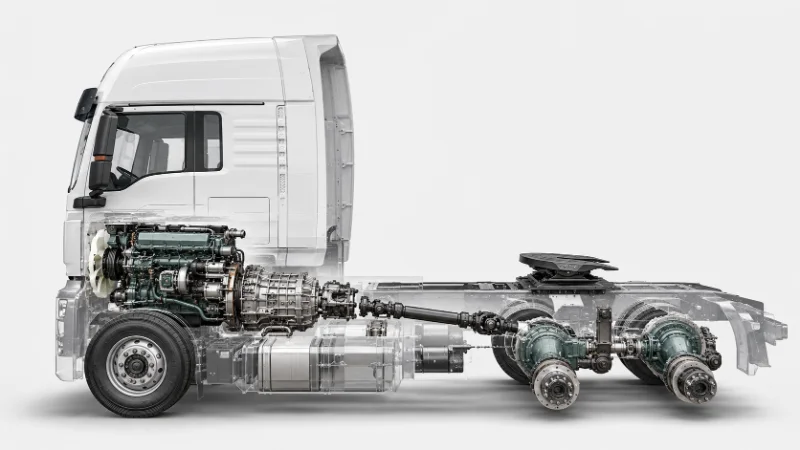
| Model | Example build / engine code | Power | Transmission | Emission (example) | Primary duty |
|---|---|---|---|---|---|
| C7H | e.g. ZZ4256V324HE1B / MC11.44-50 | 400–540 hp | Manual (ZF16) or AMT | Euro II–VI by market | Long-haul tractor, heavy dump |
| G7 | MAN-platform MC-series (code varies) | ~480 hp common | Manual or AMT | Euro III–VI | Long-haul tractor |
| G7S | e.g. ZZ4256V384HC1B / MC13.54-30 | up to 540 hp | ZF AMT with retarder | Euro III–VI | High-spec long-haul, premium cab |
The codes above are real example builds, not a fixed catalog. The same model ships with different engines, gearboxes, and emission certificates by market and year. Confirm the exact code on the build sheet before comparing prices.
The choice usually comes down to route. A base C7H handles flat, medium-load corridors, where a lighter SITRAK 4×2 tractor often does the job. Heavy or mountainous work justifies the higher-output, AMT-equipped G7S. We match the tier to the route, not to peak horsepower, because the cheapest adequate truck beats the most powerful unnecessary one.
New vs. Used SITRAK: How Condition Reshapes the Price
Condition is often the biggest price lever on a SITRAK quote. Used units usually cost well below new ones, depending on mileage, refurbishment, and remaining warranty. A reconditioned tractor and a factory-fresh one can differ widely, even at the same model and horsepower.
The headline number hides the trade-offs. A refurbished unit may run a different engine than the original spec. Warranty is usually shorter or gone, and wear depends on how the truck was used. We check engine origin, service condition, and parts supply on every used unit before quoting. Inspecting used units before purchase is what separates a bargain from a repair bill.
Beyond the Quoted Price: What Lands After FOB
A SITRAK quote usually shows the FOB factory price, not the landed cost. The landed cost depends on ocean freight, duties, and local compliance, which all sit outside the sticker.
A price read without that context understates the capital you need to get the truck on the road.
Port-to-yard logistics, import duties, and in-country registration are a separate calculation from the truck price. We quote the unit and let your broker handle the rest, rather than blur the two. Homologation and registration rules vary by country, and they belong to a separate review. Where an AMT or a higher emission tier is involved, those premiums are already in the quoted unit, and the landed-cost layer sits on top.
How to Read a SITRAK Quote Before You Pay
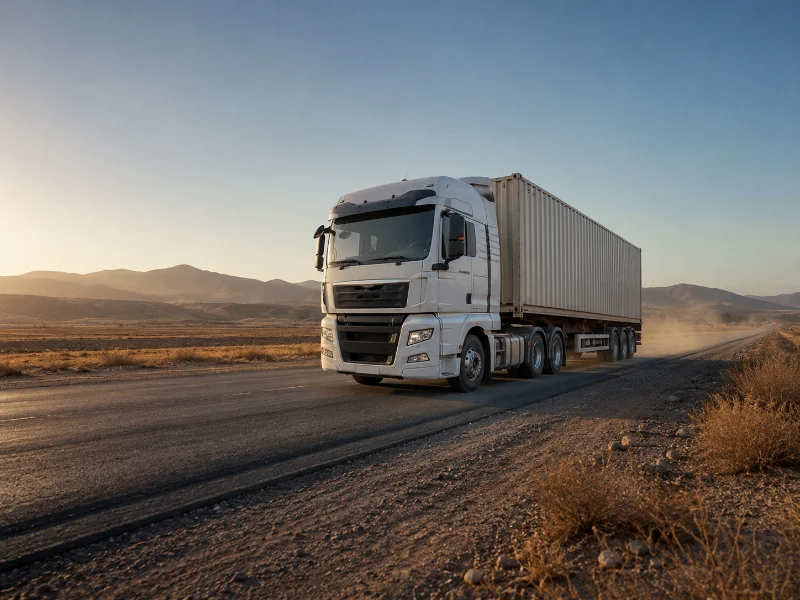
A credible SITRAK quote names the exact model code, engine, emission tier, transmission, and condition. We verify each one against the build sheet before a unit ships. A price without those fields is a number, not a specification. For example, a sound quote reads “2022 used C7H 6×4, Euro V, manual, FOB Qingdao” — model, year, emission, drivetrain, and port all stated, not just “SITRAK tractor, good price.”
On trucks bound for high-dust, high-heat routes, we re-check the cooling package and intake sealing first. That is where an under-specced unit fails earliest in service. The same goes for paperwork: the emission certificate has to match the destination’s law, not the buyer’s preference.
Before committing to a SITRAK order, confirm the following:
- Model code, build year, and engine plate / engine model
- Mileage and condition (for used units) and remaining warranty
- Transmission model (manual or AMT) and axle configuration
- Emission certificate matching the destination’s registration rules
- Pre-shipment inspection (PSI) report
- Price basis (FOB or CIF) and confirmed spare-parts lead time
We align the contract to these points, so the truck that arrives is the truck that was quoted.
Conclusion
Pricing a SITRAK comes down to three choices: which model, which emission tier, and what condition. Every honest quote lets you trace the number back to those three. Horsepower and badge are the easy part, but the specification is where the cost really sits.
In our export work, the trucks that cause trouble after delivery are rarely the ones whose build sheet we checked up front. That is why we treat emission matching and engine-origin checks as non-negotiable. Some costs, such as landed price and registration, depend on your destination and need project-level confirmation before we can price them.
If you are comparing SITRAK quotes, send us the model code, emission requirement, and destination market. We will verify the build and return a specification-matched price. Contact us to request a quote review or submit your specification, and we will match the offer to your route and registration needs.
Weighing SITRAK against another platform? Our bestselling Shacman Truck line is a comparable heavy-duty option worth a look alongside it.
FAQ
How much does a new SITRAK tractor truck cost?
A new SITRAK tractor is usually listed around USD 30,000–70,000 FOB China. A base Euro III manual unit sits near the bottom, and a high-output Euro VI AMT model sits near the top. Where your spec lands between them is the real question, not the headline figure.
Is a used SITRAK truck worth it?
A used SITRAK is worth it when the saving survives inspection. A verified low-mileage unit with clean service history can undercut a new truck by a wide margin. An unverified “bargain” often spends that saving on repairs after arrival, so the inspection decides the answer, not the price tag.
Why is SITRAK cheaper than comparable European brands?
SITRAK costs less because it builds European-derived engine technology in China under a MAN license. The platform is similar, but the manufacturing base and brand position are not. The gap reflects where it is made, not a weaker engineering base.
Does the emission standard change the price?
Emission tier is one of the clearest price drivers, and it moves the cost in one direction — up. A Euro VI unit carries more hardware and certification than a Euro II build, so it lists higher. Matching the certified tier to your country’s law matters as much as the price gap, because the wrong tier cannot be registered.
Which SITRAK model suits heavy haul or mining?
For heavy haul and mining, the higher-output C7H and G7S in 6×4 or 8×4 form are the usual pick. Reinforced axles and stronger engines hold up under continuous load. The trade-off is higher fuel use and a higher price than a base long-haul tractor.