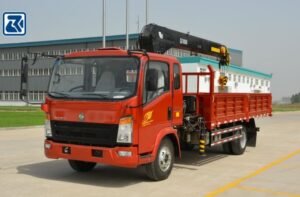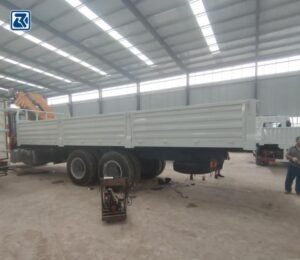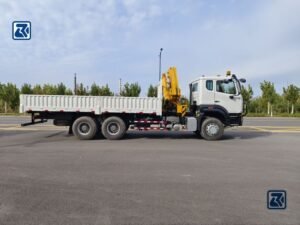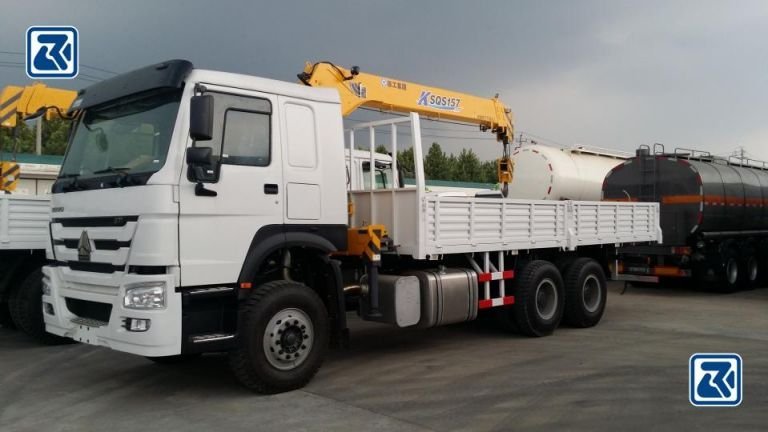
Improving the efficiency of a HOWO crane comes from finishing more of your planned lifts inside the load chart, not from working the machine harder. On a truck-mounted crane, the gains you actually control every shift sit in three places: how each lift is planned against rated capacity and working radius, how consistently the hydraulic and mechanical systems are maintained, and how well the operator and ground crew move a load together. This guide walks through those levers for fleet and jobsite teams, and it flags the safety limits that decide whether a faster cycle is a safe one. It does not cover choosing a specific crane model or setting exact service intervals for a given chassis — those follow the unit’s manual and its load chart.
Start Every Lift Inside the Load Chart and Working Radius
The quickest way to lose a day is to plan a lift the crane cannot legally make, so begin with the rated capacity at the actual working radius, not the headline tonnage. Capacity falls as the load moves out and the boom extends, and the rated figure still has to cover the hook block, slings, and any lifting gear. Subtract those to get the net load you can hoist. Checking the working radius against the chart before the crew rigs anything is what keeps a lift from stalling halfway.
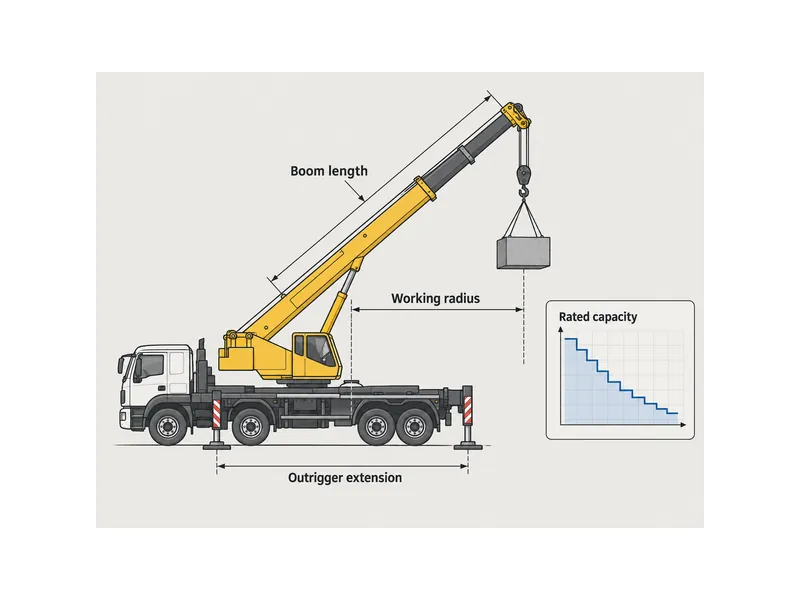
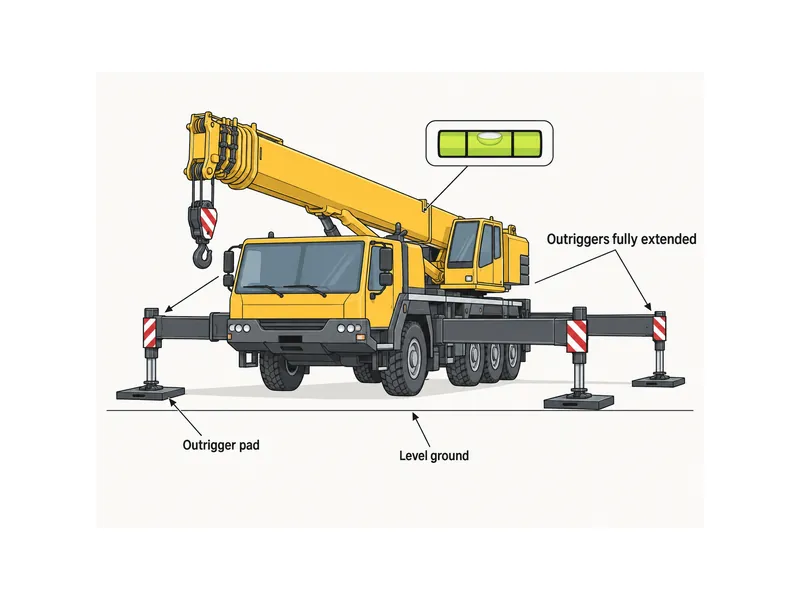
Load-chart numbers assume firm, level ground with the outriggers set the way the chart specifies, which is where field conditions quietly erode capacity. Even a couple of degrees out of level can sharply reduce what the crane may lift, because an out-of-level boom picks up side loading it was never rated for. Outriggers that sink into soft or unprepared ground do the same thing, so pads and a level setup belong in the lift plan, not in the list of afterthoughts.
How far the outriggers are deployed is its own line on the chart, and it changes the number more than crews expect. A crane rated on fully extended outriggers loses capacity when they are only partially set, and a pick taken on rubber, with the outriggers up, is rated far lower again. Read the capacity for the outrigger configuration you actually have, not the best-case row, and a planned lift is far less likely to turn into a repositioning job.
Wind is the limit crews skip most often, so read it off the machine’s own wind chart before a tall pick. Many load charts begin cutting rated capacity once wind reaches roughly 20 mph (about 32 km/h), but the exact figure belongs to the specific crane, not a rule of thumb. A NIOSH safety alert ties most mobile-crane tip-overs and boom failures to exceeding rated capacity and improper set-up. That is the clearest reason staying inside the chart is the base every other efficiency gain builds on.
Cut Downtime with Preventive Maintenance
Unplanned breakdowns cost more crane-hours than any slow operator, so a written preventive-maintenance schedule is the highest-return move on this list. The hydraulic system is where to start, since maintaining the hydraulic system of a HOWO crane means checking the fluid level, watching hoses and fittings for leaks, and tracing a soft or fading lift instead of pushing through it. In the United States, inspection and maintenance practices for mobile cranes are set out in ASME B30.5; the actual service intervals for a given unit come from its manufacturer’s manual and duty cycle.
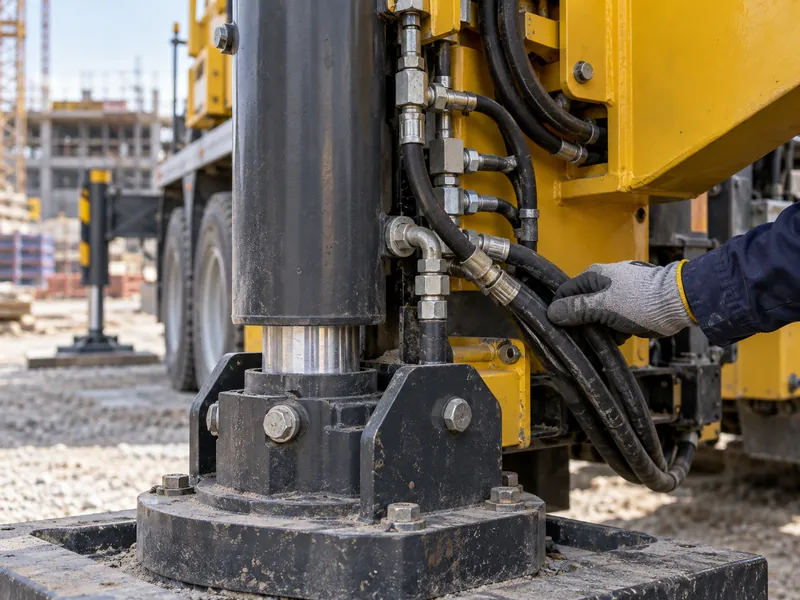
Mechanical wear shows up on the boom, winch, and wire rope long before it strands a crew, so lubrication and wear checks earn their time. Replace wire rope once it reaches the wear limits in the manual, not on a guessed schedule. Keep the boom’s slide surfaces and sheaves lubricated to hold cycle speed, because a winch that is dragging or a rope with broken wires is a downtime event waiting for the worst possible lift.
A daily pre-operation walkaround is the routine that catches most of this before the first lift, and it stays short when the crew works from a fixed list:
- Hydraulic fluid level, plus hoses and fittings checked for leaks or damage
- Wire rope, hook, and safety latch for wear, kinks, or broken wires
- Boom, sheaves, and slide surfaces for lubrication and visible wear
- Outriggers, pads, and tires for condition and correct operation
- Battery, control functions, and any load-limit or safety devices for response
Electrical faults are the ones that leave a crane dead on a Monday morning, so the battery, wiring, and control connections deserve the same routine as the hydraulics. The practical target is to catch the problem at inspection, not at the pick. A preventive pass with the diagnostic readout costs minutes, while a mid-lift failure costs the shift. Set the interval by the manufacturer’s manual and the crane’s duty cycle, not by a fixed calendar that ignores how hard the unit works.
Train and Certify Operators for Tighter, Safer Cycles
A trained operator turns fewer, cleaner movements into shorter cycles, which is where day-to-day productivity actually comes from. Operator training and certification are the baseline for crane work, not an upgrade. Confirm the specific requirements against the regulations that apply to your site, jurisdiction, and machine class before assigning an operator. Smooth starts and stops keep the load from swinging, which cuts the settling time before placement and spares the boom and rope from shock loading.
Setup speed and ground communication are the other half of the cycle, and they are learned, not bought. An operator who knows the crane’s outrigger and rigging routine cold spends less time preparing and more time lifting. A ground crew using standard hand signals or clear radio calls removes the pauses that come from second-guessing a placement. On a multi-lift day, the minutes saved on each setup and each signal are the ones that add up.
Add Load-Sensing and Remote Monitoring to Reduce Errors
Where a crane is fitted with a load moment indicator and set up per the manual, load monitoring gives the operator real-time feedback on where the lift sits against the chart. That feedback helps the crew see an approaching overload before it forces a stop. The steadier operation is a direct efficiency gain because the crew is not pausing to recompute by hand, though load-sensing does not replace the load chart, on-site judgment, or the lift plan. Used within those limits, it also supports placement accuracy when a load has to land right the first time.
Telematics and remote diagnostics move maintenance from reactive to predictive, which is the difference between a scheduled fix and a field breakdown. When the system flags rising hydraulic pressure or an engine fault early, a maintenance planner can pull the crane on a low-demand slot instead of losing it mid-project. On a larger site, the same location and status data help coordinate cranes and crews so machines are not idling while waiting on each other.
Lower Fuel Burn and Plan the Site for Fewer Repositions
Fuel is a running cost you trim with habits more than hardware, starting with idling that adds up across a shift. Shutting the engine down between long waits, planning direct travel paths on site, and driving the carrier smoothly all cut fuel and mechanical wear at once. The detail behind those figures is covered in the breakdown of HOWO truck-mounted crane fuel consumption. Loading the crane as designed matters too, since an overloaded engine burns more and wears faster.
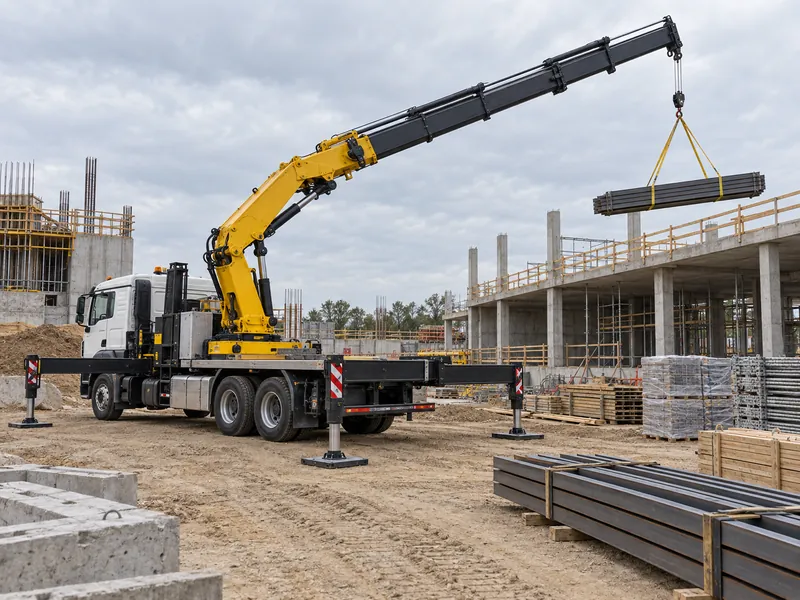
Often the reposition, not the lift, is the biggest time sink, so plan the layout and lift order to work from as few set-up points as the site allows. Sequencing lifts by priority and access — grouping picks that share a footprint, clearing travel lanes, and marking work zones — cuts the repeated tear-down and re-level that stretches a schedule. Whether that planning pays off more than an operating tweak depends on the job’s pick distribution, access, and how many outrigger set-ups it would otherwise take.
Conclusion
The efficiency of a HOWO crane is mostly decided before the boom leaves the rest, in the pre-lift confirmation the crew runs every time: rated capacity at the working radius, a firm and level setup with outriggers correctly set, the wind read off the chart, and the machine current on its maintenance schedule. Get that order right and the productivity gains — smoother cycles, fewer repositions, less downtime — follow without ever pushing the crane past its rated limits. If you are matching a crane to a recurring lift profile instead of tuning an existing one, the guide to choosing the right HOWO truck-mounted crane model covers that decision separately. When you are ready to size or spec a unit for your work, you can [request a HOWO quote](#) for your lift profile.
FAQ
How often should a HOWO crane be serviced?
Service intervals follow the unit’s manual and its duty cycle, not a fixed calendar, so a crane running heavy shifts is inspected more often than one used occasionally. Daily pre-operation checks of the hydraulic, mechanical, and electrical systems are the constant; the deeper scheduled service and any professional inspection follow the manufacturer’s guidance.
What reduces a HOWO crane’s rated lifting capacity?
Rated capacity drops as the working radius increases, as the outriggers are set at less than full extension, and as the crane sits out of level, because each of those adds load the boom was not rated to carry. Wind above the chart’s threshold reduces it further, and the net load also has to account for the hook block and rigging.
How much wind is too much for crane lifting?
Follow the machine’s own wind chart, which sets the limit for that specific crane and load. As a general pattern many charts begin derating capacity once wind reaches around 20 mph (about 32 km/h), but that figure is a starting point for planning, not a substitute for the chart.
Do HOWO crane operators need to be certified?
Operator training and certification are commonly required for crane work, and the exact rules depend on where and how the crane is used, so confirm the requirement for your jurisdiction, site, and machine class before assigning an operator. Beyond compliance, a certified operator’s smoother, more accurate lifts shorten cycles and cut equipment wear.
How do I get more lifts per day without overloading?
Cut the number of set-ups by planning lift order and site layout, and keep every pick inside the load chart so no lift has to be re-rigged or abandoned. Faster, safer cycles come from setup discipline and sequencing, not from working closer to the tipping point.
Further Reading
- ASME B30.5 – Mobile and Locomotive Cranes — ASME (T2). The U.S. safety standard covering inspection, testing, maintenance, and operation of mobile cranes.
- Crane, Derrick and Hoist Safety Overview — OSHA (T1). Federal requirements for safe crane operation and operator certification in construction.