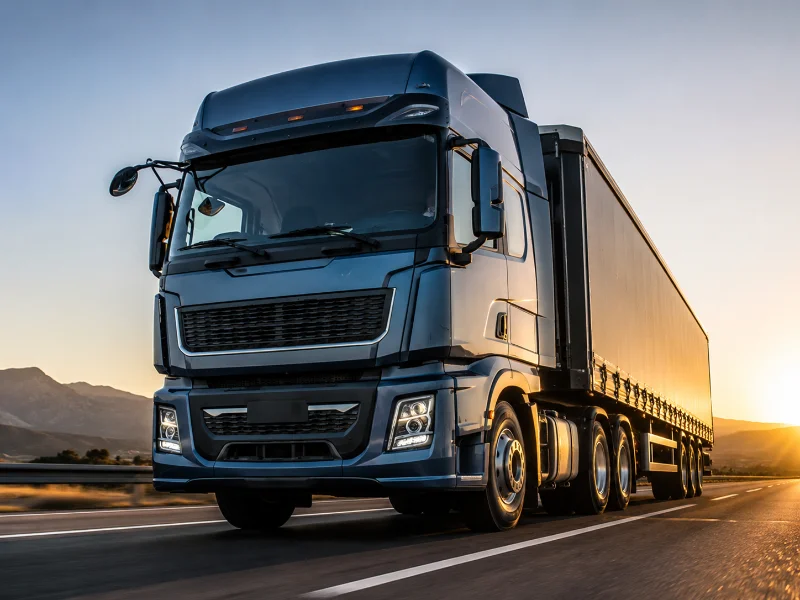
The Shacman X3000 is a heavy-duty highway truck in Shacman’s 3000 Series. It uses MAN-technology driveline parts, and it suits operators who haul goods over distance rather than over rough sites. What it delivers for your fleet depends less on the badge than on how you spec it. The engine, axle layout, and cab grade drive the outcome. This guide covers chassis and drivetrain selection, not the separate job of fitting a dump, tanker, or mixer body to the frame. That body work is sized against your payload and local axle limits. Below, we walk through the main variables and the checks we use to fit a build to real conditions.
Where Buyers Misjudge the X3000
The most common mistake is treating the X3000 as one fixed spec, when it is really a family of engines, axle counts, and cab grades. The gap between them depends on how far the ordered driveline sits from your real duty cycle. Buyers who order by model name alone often get a driveline tuned for a different job. The mismatch usually shows up first as early clutch or driveline wear.
A second myth is that the X3000 is Shacman’s flagship, or just a pricier F3000. It is neither. The X3000 sits in the 3000 Series, below the newer X5000 and X6000 lines. It targets highway logistics, not the rough-site work the F3000 handles. We fix the gross combination weight, gradient, and route surface before suggesting a variant. The badge is the last call, not the first.
Shacman X3000 Configuration Range at a Glance
The figures below are typical X3000 tractor ranges rather than fixed specs, and each shifts with production year, market, and build sheet. So treat the table as a starting point for a quote, not a datasheet. We check every line against the real VIN and build documents before an order is placed. For a worked example, compare a Shacman X3000 6×4 tractor truck build against your own load plan.
| Item | Common range / option | Confirm on build sheet |
|---|---|---|
| Drive type | 4×2, 6×4, selected 8×4 / 6×6 | Local axle-load rules |
| Engine | Weichai WP10 / WP12 / WP13; Cummins ISM-series | Engine code and emission tier |
| Power | Approx. 270–550 HP by model and market | Exact rating on build sheet |
| Transmission | FAST multi-speed manual; automated options by market | Gearbox model |
| Front axle | MAN-technology front axle | Axle rating |
| Rear axle | MAN-technology, single or double reduction | Ratio and reduction type |
| Fuel tank | Sized to route range | Capacity vs refuelling access |
| Cab grade | Standard to high-roof sleeper | Trim and sleeper width |
Before you order, we recommend confirming at least the following in writing:
- Engine code and emission certificate — matched to your import, registration, and inspection market.
- Chassis VIN and build sheet — the real configuration, not a marketing page.
- Axle rating and ratio — sets legal load, gradeability, and fuel burn.
- GCW / GVW rating — defines your towing mass and compliance ceiling.
Engine and Drivetrain Options That Shape the Decision
Engine choice on the X3000 spans several families, and the right output depends on your load, gradient, and cruising speed. The units we see most on export builds are Weichai WP10, WP12, and WP13, plus Cummins ISM-series engines. For a fuller view of what engine Shacman uses, read that background before you compare outputs.
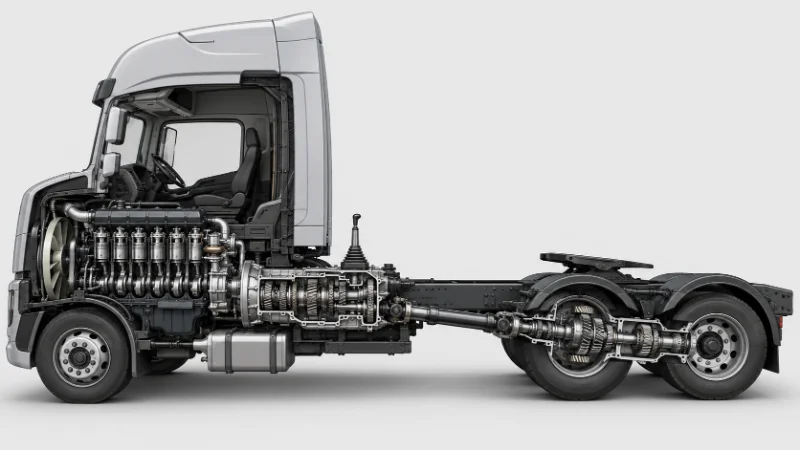
Displacement is not the same across these families. The Weichai WP12 runs about 11.6 litres, while a Cummins ISM-series unit sits near the 10.8-litre class. So a quoted WP12 and a quoted ISM are different engines, even at similar power. We confirm the exact engine code, emission tier, and axle ratio on the build sheet. We do not rely on a brochure range, because published figures shift by year and market. On emissions, X3000 export builds usually run from Euro II to Euro V, and some markets also reference Euro VI. The tier that applies to you depends on year, engine code, and destination. Under-speccing power to cut the purchase price tends to come back later. You pay it in slow hill climbs and higher fuel burn per tonne-kilometre. The cheaper engine is rarely the cheaper choice over the truck’s life.
Axle Configurations and Matching Them to Your Load
Axle configuration sets the X3000’s traction and legal payload, and the right choice depends on your load and local axle-load rules. Common layouts are 4×2, 6×4, and 8×4, with 6×6 on some builds. We match the layout to the customer’s real load plan, not to the most common default. An over-axled truck carries dead weight. An under-axled one loses payload to legal limits.
- 4×2 tractor — lighter regional haulage on good roads; lowest tare, best fuel economy.
- 6×4 tractor — the long-haul default; balances payload, traction, and loaded-highway stability.
- 8×4 rigid — maximum legal payload for heavy rigid bodies where no trailer is used.
- 6×6 — added traction for unpaved or low-grip approaches, at a fuel and cost penalty.
The drive axles usually use MAN-technology, in single or double reduction. Confirm the exact axle model, reduction type, and ratio on the build sheet. Payload and towing mass move with axle count and national rules. So treat any single quoted tonnage as a guide, and verify the rated figures for your build and market.
Cab, Comfort, and Fleet Economics
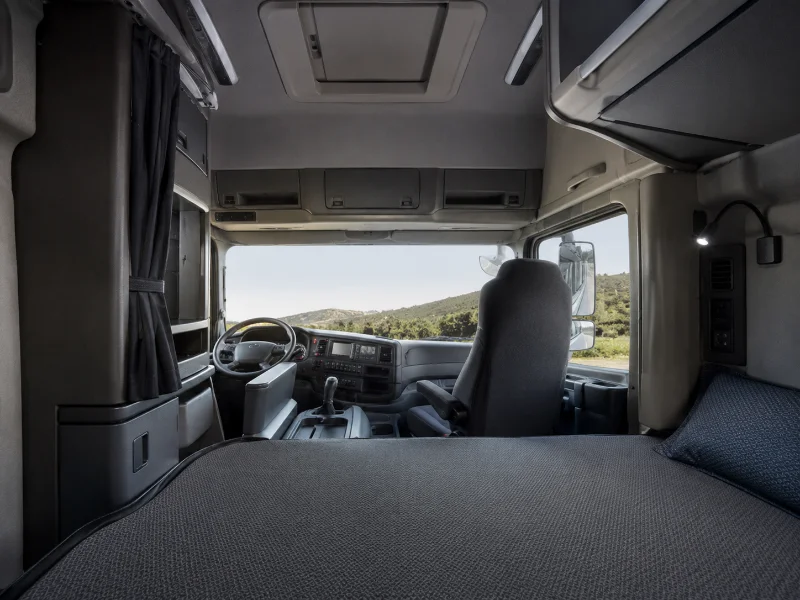
The X3000 cab affects more than driver comfort. Over high mileage, its shape and sleeper grade feed into fuel cost and driver retention. How much this matters depends on how many highway hours the truck runs. Lower drag helps on steady highway running, and an insulated, well-fitted sleeper makes multi-day routes easier. That comfort is a real factor in keeping skilled drivers.
We match cab grade to route type, not to an upsell. For high-mileage fleets, lower drag and a better cab can cut running cost and hold onto drivers. Still, work the payback against your annual mileage, fuel price, driver wages, and route profile. Do not assume it. Where a spec sheet lists sleeper width or trim, confirm it against the exact variant, since these differ across the range.
Choosing Between the X3000 and Shacman’s Other Series
Choosing between the X3000, F3000, and H3000 comes down to duty cycle, not prestige. The deciding factors are terrain, load type, and cost over time. We compare the series on the numbers that drive operating cost, not on headline horsepower. Our breakdown of the difference between the Shacman F3000 and X3000 goes deeper on that pairing.
| Series | Primary duty | Chassis / comfort emphasis | Typically best for |
|---|---|---|---|
| F3000 | Construction, mining, rough terrain | Rugged, durability-first | Heavy loads, harsh sites, cost-sensitive off-road work |
| H3000 | Regional and mixed haulage | Balanced chassis and ergonomics | Mid-range payload and mixed routes |
| X3000 | Highway logistics and long-haul | Aerodynamic, comfort-focused | High-mileage fleets prioritising fuel economy and driver comfort |
The F3000 usually wins on upfront cost and simplicity in harsh conditions. The X3000 earns its premium back through fuel savings and comfort on high-mileage routes. Total cost of ownership, not sticker price, is the sound basis for the call. That figure depends on your fuel price, annual distance, and how long you keep the truck.
Conclusion
The X3000 rewards buyers who treat it as a set of choices: duty cycle, engine and axle spec, cab grade. In the export quotes we review, the builds with the fewest driveline complaints share one trait. They were matched to a verified gross combination weight and route gradient, not ordered on horsepower alone. The failure we see most often traces back to a spec locked in before the conditions were checked.
Exact payload, emission tier, and axle ratios still need project-level confirmation against your loads and local rules. As a specialist Shacman truck supplier, we fit each build to its route before it ships. If you are weighing an X3000, send us your route profile, typical loaded weight, and target emission tier. We will match a configuration to it and confirm the ratings before you commit.
FAQ
What engine options does the Shacman X3000 offer?
X3000 builds mostly use Weichai WP10, WP12, or WP13 engines, or a Cummins ISM-series unit. Power runs from roughly 270 to 550 HP by variant and market. Because the exact code sets your power, torque, and emission tier, confirm it on the build sheet before you order.
Should I choose a Weichai WP12 or a Cummins ISM engine?
Pick by torque and parts support, not by name. The WP12 is the larger unit at about 11.6 litres; a Cummins ISM sits near 10.8 litres, with a different torque curve and service network. Match the engine to your gradient, load, and local parts supply.
Is the X3000 or the F3000 better for construction?
For construction and mining, the F3000 is the better fit. Its rugged chassis and higher clearance are made for rough ground and heavy site loads. Keep the X3000 for highway routes, where its aerodynamic cab pays off.
Which axle layout should I pick for the X3000?
Match the axle count to your load and local axle-load limits, not to habit. A 6×4 suits most long-haul work, while an 8×4 carries heavier rigid bodies. A 4×2 keeps a light regional truck efficient, and a 6×6 adds grip off good roads. Over-axling adds dead weight, and under-axling costs you legal payload.
What is the typical GCW of an X3000 6×4 tractor?
GCW on an X3000 6×4 has no single fixed value. It follows the axle rating, engine output, and your country’s axle-load rules. Ask for the rated GCW on your specific build before you plan a load.
Does the X3000 come in Euro 5 or Euro 6?
X3000 export builds are commonly listed from Euro II up to Euro V, and some markets reference Euro VI. The tier you need depends on your import and registration country. Confirm the emission certificate before purchase, since it must match local rules.