HOWO concrete mixer trucks are rated at drum capacities of roughly 6, 8, 10, and 12 cubic meters, which works out to about 8 to 16 cubic yards of mixing volume. The number that actually governs a job in the United States, though, is smaller than either figure: how much concrete the truck can legally carry on the road. Because federal weight limits usually run out before the drum does, the practical answer to “what capacity do I need” depends on your project’s volume, your site access, and the load your axles are allowed to put on the pavement. This article walks through the HOWO concrete mixer trucks capacity range, what each size is suited for, and why the drum rating and the deliverable load are two different numbers you have to plan around.
HOWO Concrete Mixer Trucks: Reliability in the Field
HOWO mixer trucks pair a rotating mixing drum with a heavy-duty chassis so concrete stays agitated and workable from the batch plant to the pour. Built by Sinotruk, they use the mixing drum to keep the mix homogeneous in transit, which is what lets a load survive the drive without segregating or starting to set. Capacity is expressed by the drum’s rated mixing volume in cubic meters, but that rating is only the starting point for what the truck delivers on site.
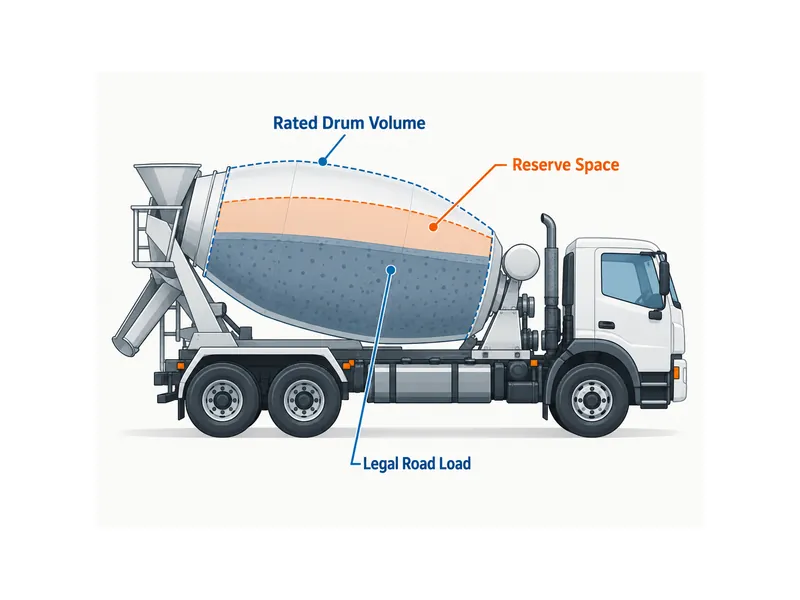
The drum’s usable volume is smaller than the shell you see. Under standard practice reflected in ASTM C 94, a truck mixer is rated to carry about 63% of its gross drum volume as a mixer and up to 80% when it is only agitating an already-mixed load. That reserve space is not wasted; it is the room the blades need to fold and turn the mix. It also means a big-looking drum never delivers its full physical volume, which is the first thing to understand before comparing sizes.
Rated Drum Capacity vs. Legal Load: The Two Numbers That Matter
The most useful way to read mixer capacity is as two separate numbers: the rated drum volume and the legal load. The rated volume is what the manufacturer says the drum will mix; the legal load is what road-weight rules let you carry once the mix is inside. For most US work the legal load, not the drum, sets the limit, so a truck with a large drum still leaves the plant only partly full.
Why weight law caps the load
Concrete is heavy, and that weight fills a truck’s legal allowance before the drum fills up. Normal-weight concrete runs about 4,000 pounds per cubic yard, so even a modest load adds up fast against axle and gross-weight limits. The Federal Highway Administration caps gross vehicle weight on the Interstate System at 80,000 pounds, with single axles limited to 20,000 pounds and tandem axles to 34,000 pounds. Axle spacing is further governed by the federal Bridge Formula. Subtract the mixer’s own tare weight from that ceiling and only part of the drum’s rated volume can legally ride on public roads.
What that means in cubic yards
In practice, US ready-mix trucks are typically sized around 9 to 11 cubic yards of deliverable concrete even when the physical drum could hold more, because weight law and the rated-volume rule both pull the working load down. So a HOWO drum rated at 10 cubic meters (about 13 cubic yards by drum rating) will not put 13 yards on the road in a jurisdiction holding to the 80,000-pound ceiling. The gap between “drum rating” and “what leaves the plant” is normal, and sizing to the legal load rather than the drum number is what keeps a truck compliant and a schedule realistic. State rules vary, and some states permit higher ready-mix weights, so confirm the limit where the truck will actually run.
Capacity Options for HOWO Concrete Mixer Trucks
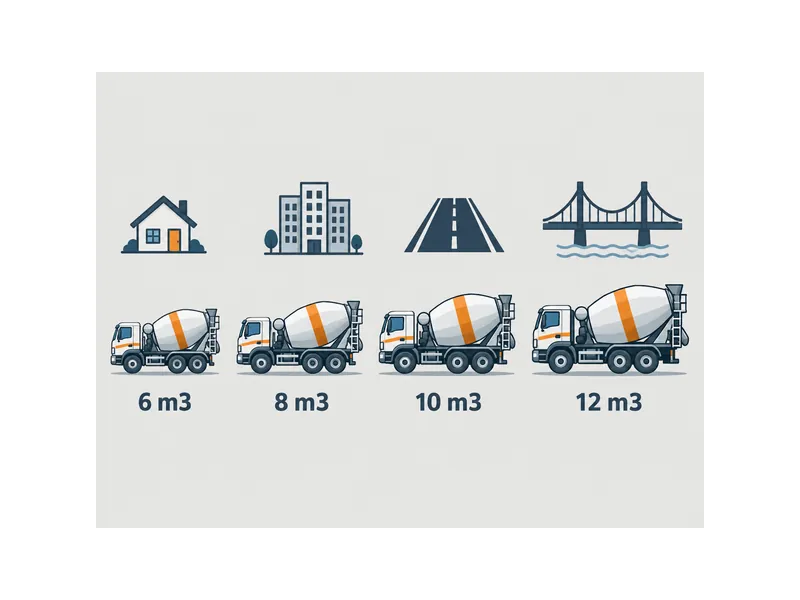
HOWO offers mixer trucks across a rated drum range from about 6 to 12 cubic meters, and the right size follows project volume more than anything else. The figures below are drum-rated mixing volumes with their approximate cubic-yard equivalents; treat the cubic-yard number as mixing volume, not guaranteed road-legal payload, which depends on the weight rules above.
6 m³ (about 7.8 cubic yards)
Small to mid-size pours and tight urban sites are where the 6 m³ rating fits. A lower rated volume can suit residential driveways, repair patches, and constrained downtown lots, though whether a given truck actually fits depends on its specific chassis, turning room, axle loads, and ground bearing rather than drum size alone.
8 m³ (about 10.5 cubic yards)
Medium commercial buildings, municipal work, and mid-size road jobs are the typical home for the 8 m³ rating. It balances a useful load against maneuverability, so many mixed-use fleets keep this size on hand, though the right fit still depends on daily volume and access.
10 m³ (about 13 cubic yards)
Trip reduction on larger commercial and infrastructure pours is the case for the 10 m³ rating, subject to the legal payload, not the 13-yard drum figure. On open sites with an adequate axle configuration, fewer and larger deliveries cut cycle time between plant and pour.
12 m³ (about 15.7 cubic yards)
Only where access and local weight allowances permit does the 12 m³ rating, HOWO’s largest common option, earn its place on high-volume infrastructure and continuous pours. Where the site cannot accept a heavy, long truck or local limits cap the load, the extra drum volume rides underfilled.
Factors to Consider When Choosing Mixer Truck Capacity
Match capacity to the load your project and roads can accept, not to the largest drum available. A handful of variables decide the right size, and each one has a check you can run before you commit.
Project volume and daily pour rate come first. Estimate total concrete and, more importantly, the volume you need per pour day; high daily demand favors larger drums to cut trips, while intermittent low-volume work is cheaper and more flexible with a 6 to 8 m³ truck. The verification here is simple: divide your peak day’s concrete by realistic legal loads to see how many truck cycles it takes.
Site access sets a hard ceiling that volume cannot override. Narrow streets, tight gates, and soft ground rule out long, heavy trucks regardless of how much concrete you need, so a smaller mixer that can reach the pour beats a larger one that cannot. Walk the approach and the setup area before choosing a size.
Haul distance and mix timing round out the decision. Fresh concrete is perishable: industry practice under ASTM C 94 expects discharge within 90 minutes and before 300 drum revolutions after water is added, so a distant plant or slow site can waste part of a large load to slump loss. On longer hauls, matching load size to how fast the crew can place it protects quality more than maximizing drum volume.
Matching HOWO Mixer Capacity to Site and Project Conditions
The best-fit capacity changes with the jobsite, so read the conditions before defaulting to a size. On congested urban work, a 6 to 8 m³ HOWO mixer moves through tight streets and stages in small footprints, delivering usable loads without the access problems a larger truck brings. Larger drums here often sit underused because trucks cannot position or discharge cleanly.

On open, high-volume sites such as highway or large commercial construction, a 10 to 12 m³ mixer earns its size by reducing the number of hauls, provided the site can accept the axle loads and local weight rules allow the extra volume. Stable ground and room to line up trucks are what make the larger capacity pay back.
Operating conditions affect sustained capacity, too. Consistent output comes from matching load size to haul time and keeping the drum turning at the right speed in transit; a load left too long or a drum run at the wrong speed will discharge harder regardless of nameplate capacity. Because a truck’s deliverable load is capped by weight law rather than drum size, paying for drum volume you cannot legally fill rarely pays back, so many fleets size to the legal payload first. Choosing the right model for your project weighs these trade-offs against the sizes above, and HOWO Special Truck Ltd also offers Shacman mixer trucks for buyers comparing product lines.
Maintenance for Sustained Mixer Capacity and Performance
A mixer only holds its rated capacity if the drum stays clean and the drivetrain stays serviced. Hardened concrete build-up inside the drum steals usable volume and unbalances the load, so daily rinsing and periodic deep cleaning are what preserve the capacity you paid for. Regular maintenance of drum bearings, rollers, and the hydraulic system keeps the drum turning at the speeds mixing and agitation require, and inspecting wear parts such as tires and brakes keeps a fully loaded truck safe and legal. Keeping these systems in condition is what protects efficient operation over the truck’s service life. HOWO Special Truck Ltd supports this with routine inspection, repair, genuine parts, and technical guidance.
Conclusion
The capacity of a HOWO concrete mixer truck is best understood as two numbers, not one: a rated drum range of 6 to 12 cubic meters and a smaller, legally deliverable load set by road-weight rules. For US work, size to the legal load and your site access first, then confirm the local weight allowance where the truck will run, and only then decide whether a larger drum actually earns its place. Get those in order and the drum rating becomes a planning input instead of a false promise. HOWO Special Truck Ltd can help match a mixer to the pour volumes, haul distances, and access limits your specific project has to work within.
FAQ
What capacities are available for HOWO concrete mixer trucks?
HOWO concrete mixer trucks are rated at drum capacities of about 6, 8, 10, and 12 cubic meters. These describe mixing capacity, not legal loads: the amount a truck can carry on the road is typically lower once weight rules apply.
How many cubic yards can a HOWO mixer truck actually deliver?
Deliverable volume is usually less than the drum rating because road-weight rules cap the load. US ready-mix trucks commonly run around 9 to 11 cubic yards of concrete even when the drum could hold more, so confirm the weight limit where the truck operates before assuming the full drum figure.
Why can’t a truck carry as much concrete as its drum holds?
Weight, not drum size, is usually the limit. Normal-weight concrete weighs about 4,000 pounds per cubic yard, and the FHWA caps interstate gross vehicle weight at 80,000 pounds, so the truck reaches its legal weight before the drum fills; standard practice also rates a mixer at about 63% of its gross drum volume.
How do I choose the right HOWO mixer capacity for my project?
Start from your peak daily pour volume and your site access, then check them against the legal load. Small or tight sites favor 6 to 8 m³ trucks, high-volume open sites favor 10 to 12 m³, and haul distance and the 90-minute freshness window should confirm the size before you commit.
Does maintenance affect mixer truck capacity?
Yes. Hardened concrete build-up inside the drum reduces usable volume and unbalances the load, so daily cleaning, drum and hydraulic lubrication, and wear-part inspection are what keep a mixer delivering its rated capacity safely.
Further Reading
- Bridge Formula Weights — Federal Highway Administration (T1). Sets the 80,000-pound interstate gross-weight ceiling and axle limits that cap how much concrete a mixer can legally haul in the US.
- PCC Truck Mixer — Pavement Interactive (T2). Explains the rated-volume rule (about 63% of gross drum volume for mixing) referenced against ASTM C 94 / AASHTO M 157.
- About Concrete — National Ready Mixed Concrete Association (T2). Documents typical US truck-mixer sizing (about 9 to 11 cubic yards) and the 90-minute / 300-revolution delivery window that constrains load timing.