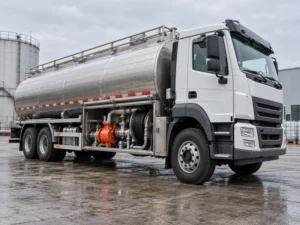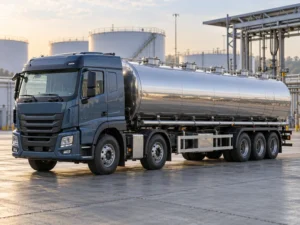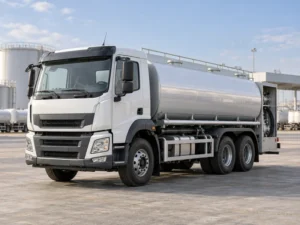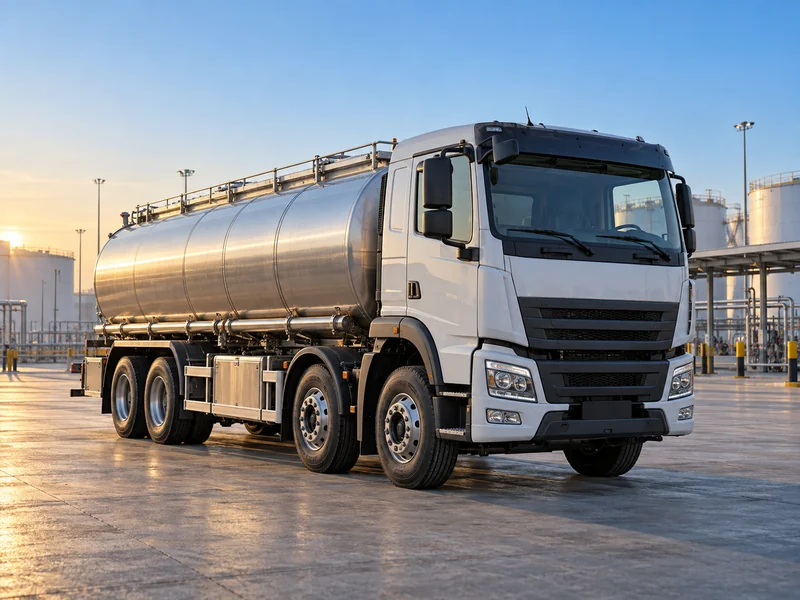
A HOWO fuel tanker tank is usually specified in one of three shell materials: carbon steel, aluminum alloy, or stainless steel. Carbon steel is the shell you see most in the specifications published by third-party suppliers, and aluminum or stainless is offered where weight savings or corrosion resistance justify a higher build cost. Either way, confirm the actual build against the truck’s build sheet and material certificate. The trade-off runs both ways: carbon steel is the low-cost, field-repairable option, while aluminum saves tare weight and resists corrosion. Neither is a default answer: the cargo you haul, the miles you run, and the years you keep the truck all pull the choice in different directions. Because the tank shell is the structural core of any HOWO liquid transport truck, the material you specify shapes payload, corrosion behavior, and compliance across the truck’s service life, not only its sticker price.
What HOWO fuel tanker tanks are made of
Each of the three shell materials suits a different job, so the choice follows the cargo and duty cycle, not a ranking. Carbon steel is a common choice for diesel and general refined-fuel work. Aluminum alloy is specified when payload and corrosion resistance justify a higher build cost. Stainless steel, or a lined carbon-steel shell, appears where the cargo is chemically aggressive or must stay uncontaminated.
Material choice matters because the shell is not a passive container. It sets the empty weight you carry on every trip, the corrosion path over years of loading cycles, and the inspection burden. A heavier shell subtracts directly from legal payload, so a decision made once at purchase repeats on every load for years. One quick check makes the point: change the shell material on paper, and tare weight, corrosion maintenance, and upfront price all move together.
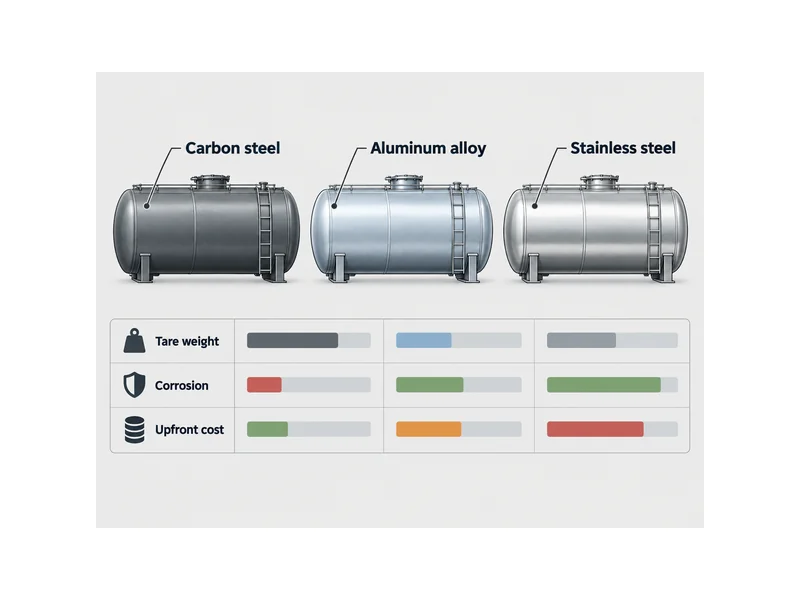
Carbon steel tank shells for HOWO fuel tankers
Carbon steel is a strong value option for a HOWO fuel tanker hauling diesel or fuel oil on predictable routes. It is generally more forgiving to weld and repair in the field than aluminum, and it is typically the lowest-cost shell to build, which is why it is a common baseline for standard configurations. Steel also carries more tensile strength than these aluminum alloys, though the working figure depends on the grade, so read it off the material certificate instead of a brochure. For a fleet that keeps trucks in regular service and can maintain a coating schedule, carbon steel remains a defensible default.
The cost of carbon steel shows up when the truck sits or the coating fails. Bare carbon steel corrodes, and a tank left idle can rust internally, which risks contaminating the next load of fuel. Fleets manage this with internal linings and rust-resistant coatings such as epoxy, but the protection is only as good as its upkeep. Carbon steel is also heavier than an equivalent aluminum shell, so the payload you give up accumulates over the truck’s life.
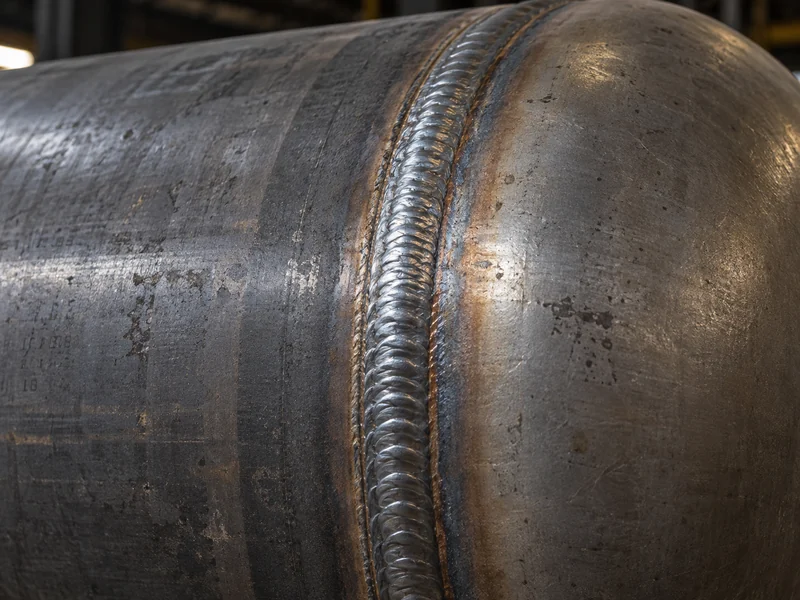
HOWO carbon-steel tanks are commonly specified in a pressure-vessel grade such as Q345R, and the shell plate is usually thinner than the dished heads. Treat any single published thickness as a starting point to confirm against the build sheet, since it is not a fixed figure. The weld quality matters as much as the plate grade: a sound tank weld should be continuous, convex, deeply penetrated, and free of porosity. Ask for the material certificate and weld records, because a nominal grade on a brochure does not tell you how the seam was actually run.
Aluminum alloy tanks and the payload trade-off
Aluminum alloy earns its higher price when weight savings and corrosion resistance return value over the truck’s life. An aluminum shell is significantly lighter than a comparable carbon-steel tank, and that saved tare weight converts to legal payload on every trip. Aluminum also forms a tight oxide film that resists rusting, so it protects fuel quality and cuts corrosion-driven downtime without a coating schedule.
The trade-off is upfront cost and repair practice. Aluminum shells cost more to buy and demand more careful welding. They generally outlast bare steel in corrosive service, but whether the higher price is worth it depends on annual mileage, cargo value, and how long you keep the truck — there is no fixed payback period. Aluminum tanks for fuel service are formed from magnesium-bearing alloys; 5052-H32, 5083, and 5454 are grades documented for truck fuel tanks, so confirm the specific alloy on the quote, since forming and weld behavior differ between them.
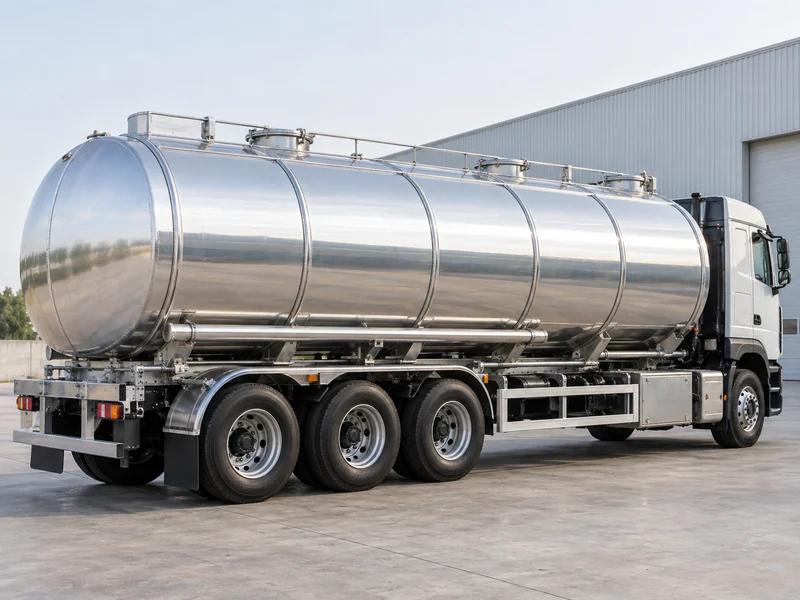
Stainless steel and internal linings for sensitive cargo
Stainless steel or a lined carbon-steel shell is the answer when the cargo is corrosive or must stay chemically clean, not for ordinary diesel runs. Stainless resists corrosion well enough that tanks are usually left unpainted, and when it is specified for fuel or chemical service it is typically a 304 or 316 grade. It carries the highest material cost of the three options, so it is reserved for duty where contamination or aggressive media would defeat carbon steel.
For many buyers the practical middle path is a lined carbon-steel tank instead of full stainless. An internal epoxy or phenolic lining lets a lower-cost steel shell handle fuels that would otherwise attack bare metal, at the price of maintaining the lining over time. The decision reduces to cargo chemistry: match the shell or lining to the most aggressive product the tank will ever carry, then verify the lining is rated for it.
Matching tank material to fuel, duty cycle, and budget
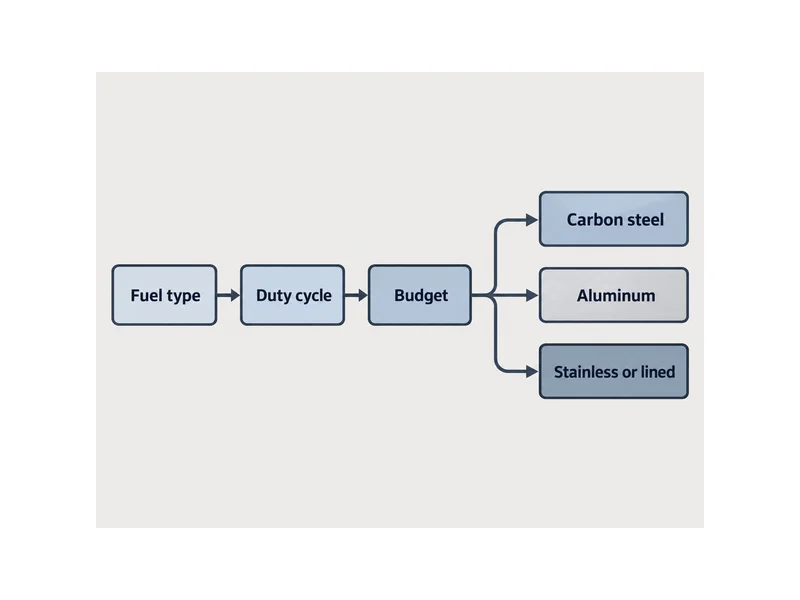
Match the shell to fuel type first, duty cycle second, and budget third, in that order, because a material that cannot carry the cargo safely is disqualified before cost enters. For diesel and standard refined fuels on regular routes, carbon steel with a maintained lining is usually sufficient. For high-mileage work where payload drives revenue, or humid and coastal environments where corrosion is relentless, aluminum’s weight and corrosion advantages weigh more heavily. For corrosive or contamination-sensitive cargo, stainless or a rated lining moves to the front regardless of price.
Budget is the last filter, not the first, and it works as a lifecycle figure, not a purchase price alone. Aluminum and stainless raise the initial HOWO tanker truck price, so any payback rests on mileage, cargo value, and how long you keep the truck. Selecting shell material is one part of how you choose the right HOWO tank truck model, alongside axle configuration, capacity, and compartment layout that also shape tare weight and legal payload.
| Shell material | Weight & strength notes | Corrosion behavior | Relative upfront cost | Where it is typically considered |
|---|---|---|---|---|
| Carbon steel (e.g. Q345R) | Heaviest shell; higher tensile strength than aluminum, though the figure depends on grade | Rusts if bare or idle; needs lining/coating | Lowest | Diesel and refined fuel on regular routes |
| Aluminum alloy (5052-H32 / 5083 / 5454) | Lighter shell, more payload; lower tensile strength | Self-protecting oxide film; strong corrosion life | Higher | High-mileage, payload-driven, or humid climates |
| Stainless steel (304 / 316) or lined steel | Corrosion-clean, contamination-safe | Excellent; usually unpainted | Highest | Corrosive or contamination-sensitive cargo |
Verifying tank material and compliance before you buy
Verify material, thickness, and compliance on paper before you accept a tank, because a shell you cannot document is a shell you cannot trust. In the United States, cargo tanks for flammable fuels such as gasoline and diesel are built to the U.S. DOT 406 specification, with DOT 407 and DOT 412 covering other hazardous liquids; older units may still run under the MC-306 predecessor. Confirm which specification the tank is certified to and that the certification matches the fuel you intend to carry.
Beyond the specification plate, three checks separate a sound tank from a risk. Confirm the shell material certificate and alloy or steel grade against the quote, since the grade governs both strength and corrosion life. Confirm plate thickness for both the shell and the heads, because a single headline number can hide a thinner shell. Confirm weld integrity through the inspection records, and check that any grounding and vapor-handling fittings match the fuel and the rules of the market where the truck will run.
Conclusion
Choose carbon steel when diesel or standard refined fuel runs regular routes and you can maintain a lining; move to aluminum when payload, mileage, or a corrosive climate make weight savings and rust resistance worth the higher price; and reserve stainless or a rated lining for cargo that would contaminate or attack a steel shell. The order that keeps buyers out of trouble is fuel chemistry first, duty cycle second, lifecycle budget last, not the sticker price that tempts many first-time buyers toward bare steel. If you want a second opinion on shell grade, plate thickness, and the DOT specification for your fuel, we can walk through the build sheet with you before the tank is committed.
FAQ
Is an aluminum or carbon steel tank better for a HOWO fuel tanker hauling diesel long-haul?
For long-haul diesel work, aluminum is often the stronger candidate because the tare weight it saves turns into extra payload mile after mile, and its corrosion resistance can cut downtime. Carbon steel still makes sense when the upfront budget is tight and a lining is maintained. The premium is easier to justify on a truck that runs high annual mileage or carries high-value cargo and stays in the fleet for years; on a low-utilization truck it is harder to recoup, so no single answer fits every operator.
What tank thickness and alloy does a HOWO fuel tanker use as standard?
HOWO fuel tanker shells are commonly built in a pressure-vessel steel grade such as Q345R, or in aluminum alloys like 5083, with the dished heads usually thicker than the shell plate. Treat any single published thickness as a starting figure to confirm on the build sheet, because thickness varies with capacity, compartment layout, and the certified specification. Always request the material certificate; a brochure number is not proof of what you are buying.
Do I need stainless steel, or is carbon steel enough for gasoline transport?
Carbon steel with a suitable internal lining is generally enough for gasoline and diesel, so stainless is not required for ordinary fuel transport. Stainless steel earns its higher cost only when the cargo is corrosive or must stay chemically uncontaminated. Match the shell or lining to the most aggressive product the tank will ever carry, and verify the lining is rated for that fuel.
Will a carbon steel fuel tank rust and contaminate the fuel if the truck sits idle?
Bare carbon steel can rust internally when a truck sits idle, and that rust can contaminate the next load of fuel. Fleets prevent this with internal epoxy or phenolic linings and a maintained coating schedule, which is why lining upkeep matters as much as the plate grade. If a truck will see long idle periods, either keep the lining current or consider an aluminum shell that self-protects.
How much extra payload do I actually get from an aluminum tank over carbon steel?
There is no single tonnage figure, because the payload gain depends on the tank volume, the legal weight limit in your market, and the chassis and compartment layout you specify. A lighter aluminum shell frees up weight the truck can carry as cargo instead of steel. To size the real gain, compare the tare weights of the two builds you are actually quoting at the same volume, then check the difference against your local axle and gross-weight limits.