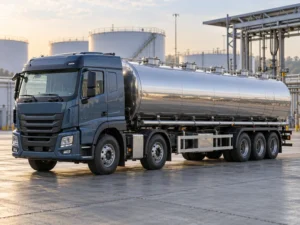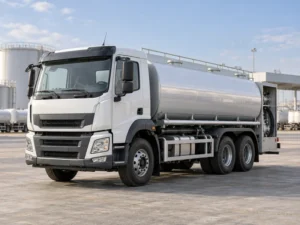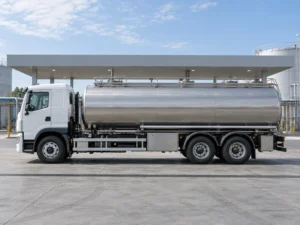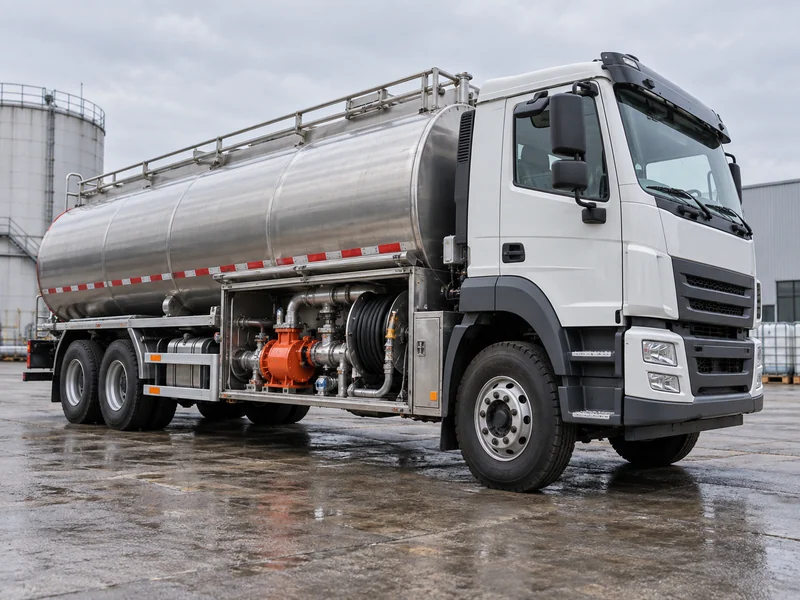
A HOWO fuel tanker pump is the transfer pump mounted on the tank body that moves fuel in and out of the tank, not the small feed pump inside the engine. Buyers searching this term usually land on two different components, so the first job is to separate them. This article covers the body-mounted pump that loads, unloads, and dispenses diesel or gasoline, how it is driven, and how to match it to your fuel and duty. The engine’s own fuel feed pump is a different part with different failure modes and is out of scope here.
What a HOWO Fuel Tanker Pump Actually Is
The pump on a fuel tanker is a fluid-transfer device that draws product from the tank and pushes it through a metered line, distinct from the engine feed pump that supplies the injectors. Both are sometimes called a “fuel pump,” which is why product listings and parts catalogs for the same keyword return two unrelated items. On the tanker superstructure the pump is part of the upper assembly that turns a chassis into a working fuel truck. It sits on the tank body of a HOWO road tanker, plumbed into the discharge line, not the engine’s fuel circuit.
Function decides the type, so it helps to state what the pump must do. It has to pull fuel from the tank or an outside container, hold enough suction to prime itself when the line is dry, and deliver a steady, measurable flow to a nozzle or another tank. Refined fuels are also low in viscosity and often non-lubricating, so the pump moves a fluid that does little to lubricate or cool its internals. Those demands — self-priming, steady metered flow, and handling light, non-lubricating fuels — are the practical reasons the industry keeps reaching for a small set of pump types.
Pump Types Used on HOWO Fuel Tankers
Three self-priming rotary types cover most fuel tanker builds: gear pumps, sliding vane pumps, and twin or “double” pump arrangements. The fluid and the job drive the selection, not brand preference. Gear pumps are the default for clean, low-viscosity fuel because they are compact, self-priming, and give a near-constant flow for metering. Sliding vane designs are also self-priming and turn up on refined-fuel and oil-delivery tankers. Some makers rate specific vane-pump models for short dry runs and wear self-adjustment, but treat those as model-specific ratings to confirm on the maker’s spec sheet, not a property of the whole class. A double-pump layout appears when a truck has to service two products or two lines independently.
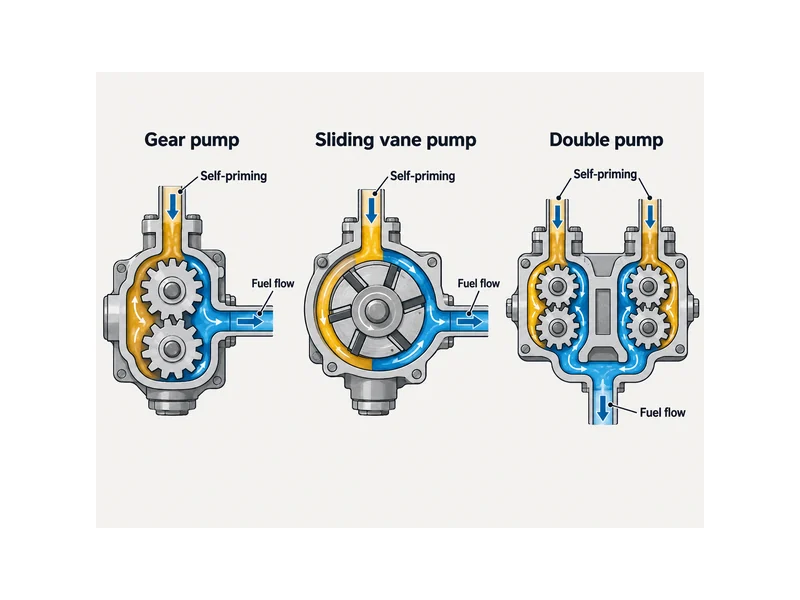
The table below groups the types on the dimensions that drive a choice. Treat it as a starting frame, not a spec sheet, because rated flow depends on the specific pump and truck.
| Pump type | Self-priming | Best-suited fluids | Typical reason to pick it |
|---|---|---|---|
| Gear pump | Yes | Clean diesel, gasoline, light oils | Compact, steady flow for metering |
| Sliding vane | Yes | Refined low-viscosity fuels, light lube oils | Steady delivery; some models rate wear self-adjustment (confirm per spec) |
| Double / twin pump | Depends on units | Two products or two lines | Independent service of separate compartments |
Viscosity is the variable that most often decides the type, so verify it against the actual product. A pump sized for diesel and gasoline is not automatically right for heavier oils, where a heavy-oil or chemical pump may be specified instead. When a manufacturer quotes an exact flow figure, confirm it against the pump model and the truck’s rated capacity. Published rates vary widely between pump sizes, so a class-wide number is not safe to assume.
How the PTO-Driven Pump System Works
A power take-off (PTO) lets the truck’s own engine drive the pump, so no separate motor is needed. Power leaves the transmission at the PTO, runs down a drive shaft, and turns the pump. The same arrangement shows up across HOWO refueling systems and general PTO fuel-truck references. The efficiency comes from reusing power the truck already carries: the PTO diverts engine power to the pump only when the operator engages it.
Downstream of the pump, the oil path is a short chain of single-purpose parts. Fuel leaves the pump and passes a filter set between the pump and the tank to catch impurities. From there it moves through ball valves (commonly a three-way selector and a two-way valve) that set direction, then reaches a flow meter that counts the liters delivered before the hose and nozzle. The flow meter is what turns a transfer pump into a dispensing system: it lets the operator record or sell fuel by measured volume.
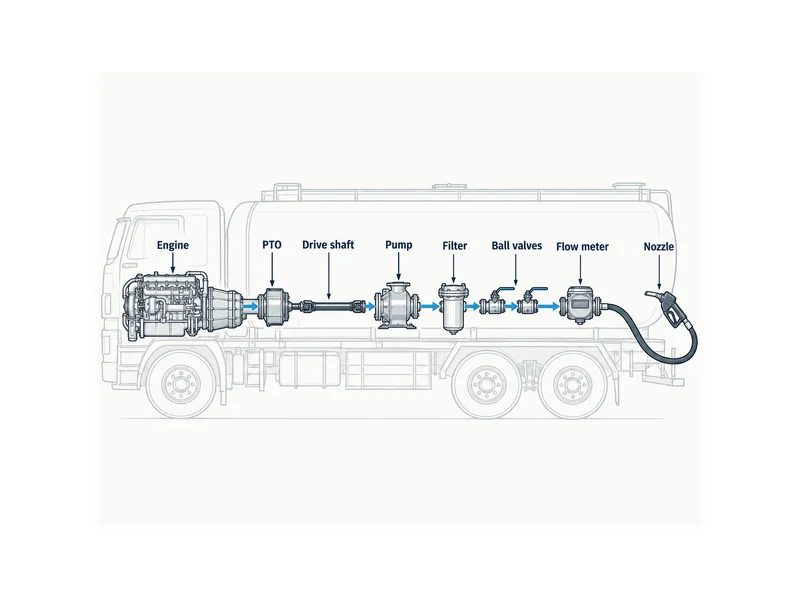
Engagement is deliberate. The PTO only drives the pump when the operator engages it. How and when to engage it — including any interlock or stationary-operation requirement — should be verified against the specific truck and local operating rules.
Loading, Unloading, and Dispensing Fuel
The same pump handles three flow directions: drawing fuel into the tank from an outside container, discharging it into a storage tank, or dispensing it into another vehicle. Ball valves redirect flow between these modes, which is why the valve arrangement, not just the pump, defines what the truck can actually do.
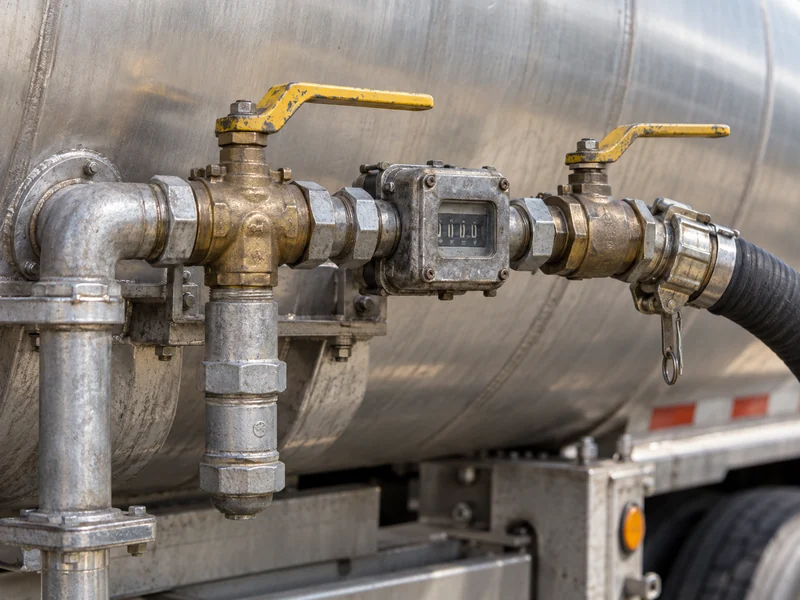
Suction geometry affects how completely the pump can empty the tank, so it is worth checking against the builder’s guidance. Some builders position the suction port around one-third of the way up the internal oil level to keep the pump fed and reduce the risk of pulling sediment or air off the very bottom. Treat the exact position as build-specific, and confirm it for your truck. Multi-compartment tanks add a further layer, because each compartment behaves as a separate product with its own draw and valve path.
Safety and Maintenance of the Pump System
Three problems dominate pump-system upkeep: contamination, leaks, and uncontrolled flow. Clean fuel is the first defense, because the filter between the tank and the pump keeps impurities off the internals. A clogged filter can restrict flow, so filter condition is worth checking if delivery drops. An emergency shut-off valve is there to stop delivery quickly if a line fails.
Leaks tend to start at the joints that carry the pump’s discharge pressure, so inspection has a natural order. Pipes, valves, and hose connections are the usual first places seepage shows. Running any pump dry for long stretches is a failure mode to avoid, since low-viscosity fuel gives the internals little lubrication. Keeping adequate clean fuel in the tank protects pump life more than any single service item.
Matching the Pump to Your Fuel and Duty
Pump choice should follow the fuel, the volume per shift, and how the truck will dispense, in that order. Start with the product. Clean diesel or gasoline points to a gear or sliding vane pump, while heavier or dirtier fluids push toward pumps rated for higher viscosity or solids. Then size to duty, because a truck refueling equipment on site all day has different flow and metering needs than one that occasionally discharges into a storage tank. Tank size and rated capacity set the practical envelope the pump has to keep up with.

Fuel tank trucks are commonly built anywhere from roughly 3,000 liters up to about 30,000 liters. The pump, meter, hose reel, and valve set are usually specified together to suit that capacity and the intended dispensing pattern. Because these parts are configurable, define the fluid, the flow you need, and the number of compartments first, then confirm the pump and meter against those requirements. Optional bottom valves, flow meters, and hose-reel lengths let a build be tailored, so treat any single quoted flow rate or hose spec as a configuration choice to verify, not a fixed property of the pump.
Conclusion
The distinction that trips up most searches is the one to carry away: the HOWO fuel tanker pump is the PTO-driven transfer and dispensing pump on the tank body, not the engine’s feed pump. Its type follows the fuel more than any brand. When you specify or verify a truck, fix the fluid and the flow you need first, then confirm the pump, meter, and valve arrangement against that duty. The detail most often read wrong is the flow rate: it belongs to the specific pump and configuration, so check it on the build instead of assuming it from the pump type.
FAQ
Does a HOWO fuel tanker use one pump to load and unload?
One pump generally handles both directions, with ball valves redirecting flow. The transfer pump can draw fuel into the tank from an outside container and discharge or dispense it back out. The three-way and two-way valves set which mode is active. A double-pump layout is used mainly when a truck has to service two products or two lines independently.
Do you need a PTO to run the pump on a fuel tank truck?
A PTO is the standard way to drive the pump on these trucks. The power take-off diverts engine power through a drive shaft to the pump. That avoids a separate motor and lets the truck dispense using its own engine. Follow the truck’s operating instructions for when and how to engage the PTO.
Is a gear pump or a sliding vane pump better for diesel?
Both suit clean diesel, so the choice is usually about flow characteristics and the specific model’s ratings. Gear pumps are compact and give a near-constant flow that is easy to meter. Some sliding vane models are rated by their makers for wear self-adjustment or short dry runs, but confirm any such rating — and the rated flow — against the specific pump before deciding.
How does the flow meter measure the fuel dispensed?
The flow meter sits in the discharge line after the pump and counts the volume delivered. Placed before the hose and nozzle, it lets the operator record or sell fuel by the liter instead of estimating. Accuracy depends on the meter and should be confirmed for the specific installation.
Where should the pump suction sit inside the tank?
Above the very bottom of the tank, at a height that is build-specific. Drawing from above the floor keeps the pump fed and reduces the chance of pulling sediment or air that collects at the bottom. Confirm the exact height for your truck instead of treating any single figure as a fixed rule.
Further Reading
- How a PTO truck refueling system works — industry technical explainer covering the PTO, drive shaft, pump, flow meter, and safety-interlock chain; scope is general PTO fuel trucks, not a specific HOWO build.
- Blackmer PTO sliding vane pump reference — pump manufacturer and distributor technical page for the self-priming and short-dry-run points on refined-fuel sliding vane pumps; confirm any flow figures against the pump model chosen.