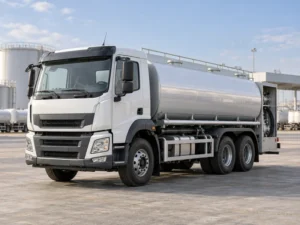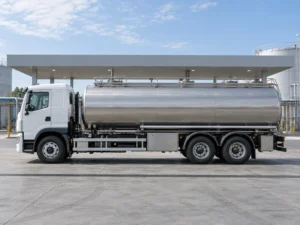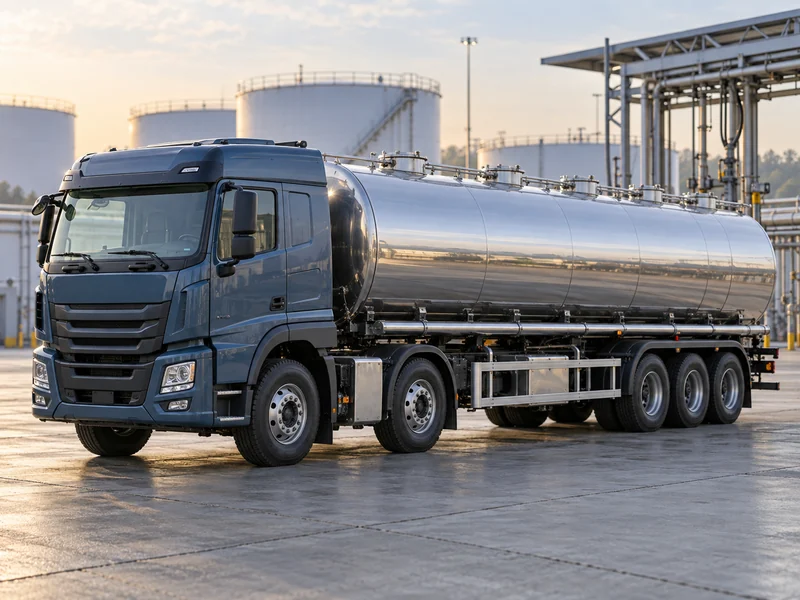
Compartments are the sealed sub-tanks inside a HOWO fuel tanker that let one vehicle carry several fuel grades at once while staying stable on the road. Instead of one open cylinder of liquid, the tank barrel is divided crosswise into separate loading spaces, each with its own fill and discharge points. That single design choice drives most of what buyers care about: how many products the truck can haul in a trip, how it behaves under braking, and how it has to be loaded to stay legal. Compartment layout is one of the first things to settle when specifying a HOWO liquid transport truck for multi-grade fuel work. It is difficult and costly to change once the tank is built.
The sections below explain what a compartment actually is, why the tank is split, how baffles and bulkheads differ, how many compartments a HOWO fuel tanker typically carries, and what the layout means for U.S. fuel-hauling compliance and inspection.
What a Compartment Is on a HOWO Fuel Tanker
A compartment is a liquid-tight section of the tank barrel that holds one product independently of the others. The tank shell is the same continuous elliptical or cylindrical barrel you see from outside. Internal transverse walls partition it into two or more isolated volumes. Each compartment gets its own manhole or fill opening on top and its own outlet and valve at the bottom. That lets a driver load diesel in one section and gasoline in another without the two ever mixing.
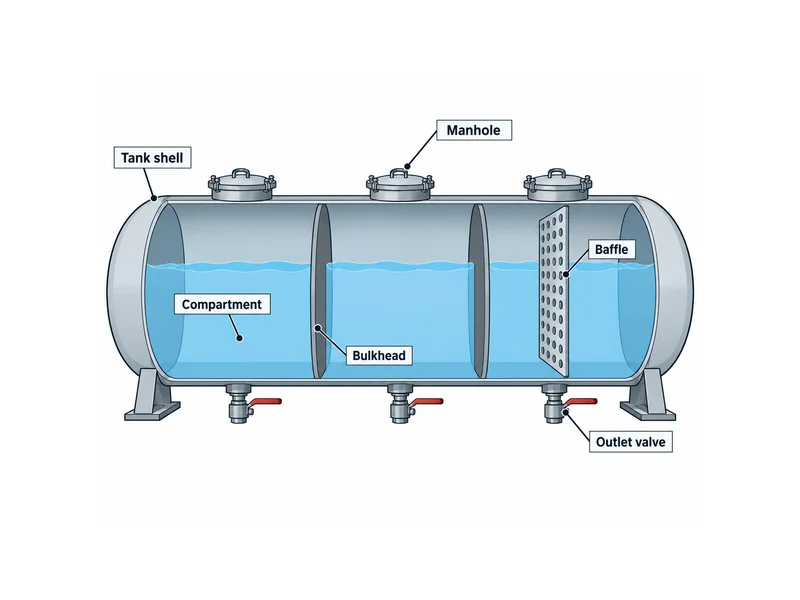
Three internal structures do the work, and they are easy to confuse: bulkheads, baffles, and surge plates. A bulkhead is the wall that actually creates a separate compartment; a baffle sits inside a compartment to control how the liquid moves; and surge or slosh plates are the general family of internal plates that damp fuel movement. Knowing which is which matters because they are governed and inspected differently, which the next sections cover. Multi-product tankers are only one of several tank layouts, and the different types of tanker trucks each handle compartmentalization in their own way.
Why HOWO Fuel Tankers Are Split Into Compartments
Splitting the tank buys three things at once: multi-grade capability, stability, and structural strength. The first is commercial. A fuel distributor rarely wants to dedicate a whole truck to a single product. Dividing the barrel lets one HOWO tanker deliver diesel, two gasoline grades, and kerosene on the same run, keeping each product pure in its own section. That is why compartment count shows up so often in fuel-tanker spec sheets.
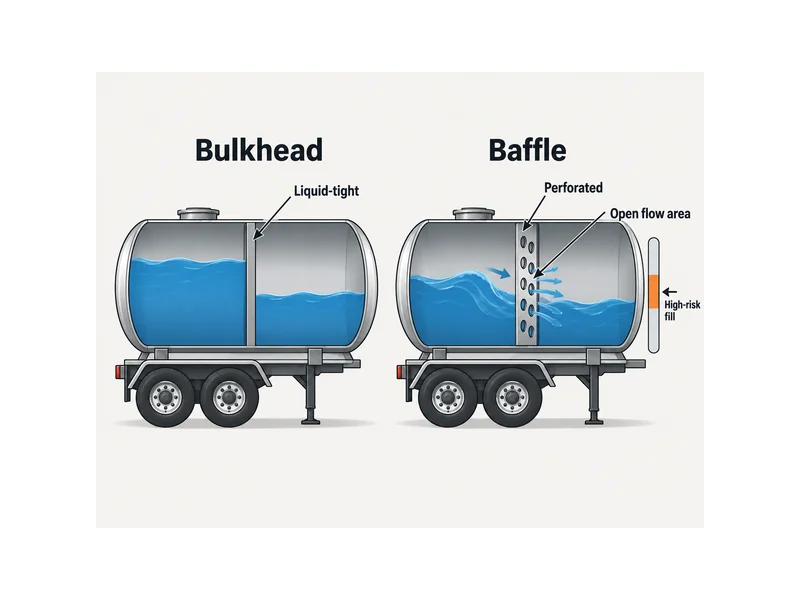
The second reason is stability, and it is where partial loads become dangerous. Liquid fuel sloshing shifts the vehicle’s center of gravity during braking and cornering. That moving mass is a recognized contributor to tanker rollovers. Surge is worst when a tank is neither full nor empty. Industry baffle guidance treats roughly the 20% to 80% fill band as the high-risk range, because that is where the liquid has the most room to build a destructive wave. Shorter compartments, plus baffles inside them, break that long axis of travel into smaller segments so the fuel cannot gather momentum end to end.
The third reason is structural. Each internal wall stiffens the barrel, so a compartmented tank resists flexing and denting better than a single long shell of the same wall thickness. For operators, the practical takeaway is that compartments are a safety and payload feature, not merely a convenience for carrying mixed loads.
Baffles vs. Bulkheads: The Two Internal Walls
Baffles and bulkheads look similar but do opposite jobs, and U.S. regulation defines them precisely. Under 49 CFR 178.320, a baffle is “a non-liquid-tight transverse partition device that deflects, checks or regulates fluid motion in a tank,” while a bulkhead is “a liquid-tight transverse closure at the ends of or between cargo tanks.” In plain terms, a bulkhead seals one compartment off from the next. A baffle deliberately lets fuel through in a controlled way to slow it down.
A baffle does not stop liquid movement; it manages the speed, volume, and direction of the flow. It is a perforated plate mounted across the tank, and the holes let fuel pass at a metered rate so a wave cannot build. Industry baffle designs typically leave somewhere around 30% to 50% of the plate face open as flow area. The exact figure depends on tank geometry and the product being carried, so treat any single number as configuration-specific, not a universal value.
The distinction has real consequences. Because a bulkhead is liquid-tight, the space between two bulkheads is a true compartment that can hold a different product. A baffle within a compartment only tames sloshing and does not create a new product space. When you read a spec sheet, bulkheads set the number of compartments, while baffles set the smoothness of ride under braking.
| Internal wall | Liquid-tight? | Main job | Creates a compartment? |
|---|---|---|---|
| Bulkhead | Yes | Seal one product section from the next | Yes |
| Baffle | No (perforated) | Slow and redirect sloshing within a section | No |
| Surge / slosh plate | No | General term for internal anti-surge plating | No |
How Many Compartments and What Size
HOWO fuel tankers do not use a single fixed compartment count; the number and volumes follow the model, chassis, and customer order. Documented HOWO builds show the split changing from one unit to the next: one published configuration carries three compartments, another is listed with four. The count is therefore a build option to confirm, not a fixed spec. Gasoline tankers in general commonly run four or five compartments and occasionally up to eight, which gives a sense of the usual upper end.
A concrete example shows how the volumes divide. One HOWO 6×4 configuration carries a 24,000-liter tank split into three equal 8,000-liter compartments, built in Q235B carbon steel with a roughly 5 mm shell and 6 mm end plates. This is one documented build, not a standard that every HOWO tanker follows. Total capacity itself spans a wide band across the market: fuel tank trucks commonly carry somewhere between about 5,000 and 9,000 gallons (roughly 19,000 to 34,000 liters), and larger units reach higher. You can compare the resulting volumes against the published HOWO tanker fuel tank capacity figures.
The right number of compartments follows from total volume and how many products you need to keep separate. Chassis choice interacts with this directly. A 6×4 platform and an 8×4 tank truck support different tank lengths, and therefore different practical compartment splits.
Material is one place where a HOWO export tanker can differ from the U.S. norm. Aluminum is the common shell material for gasoline tankers in the American market, while the documented HOWO build above uses carbon steel (Q235B). Shell material affects tare weight, corrosion behavior, and repair practice, so it belongs on any buyer’s checklist alongside compartment count.
Compartments and U.S. Fuel-Hauling Compliance
Compartment layout has to match the regulatory framework of wherever the truck runs, and in the United States that means the DOT cargo-tank rules. Flammable liquids like gasoline and diesel are hauled in DOT 406-specification cargo tanks, which are typically aluminum, low-pressure (a minimum design pressure on the order of a few psig), and available in both single- and multi-compartment forms in the roughly 9,000-gallon class. HOWO fuel tankers are built to the specification of the destination market or the customer’s order, so a unit is not automatically DOT 406 certified. Whether a given tank meets U.S. requirements is something to confirm in writing before purchase for on-road U.S. service.
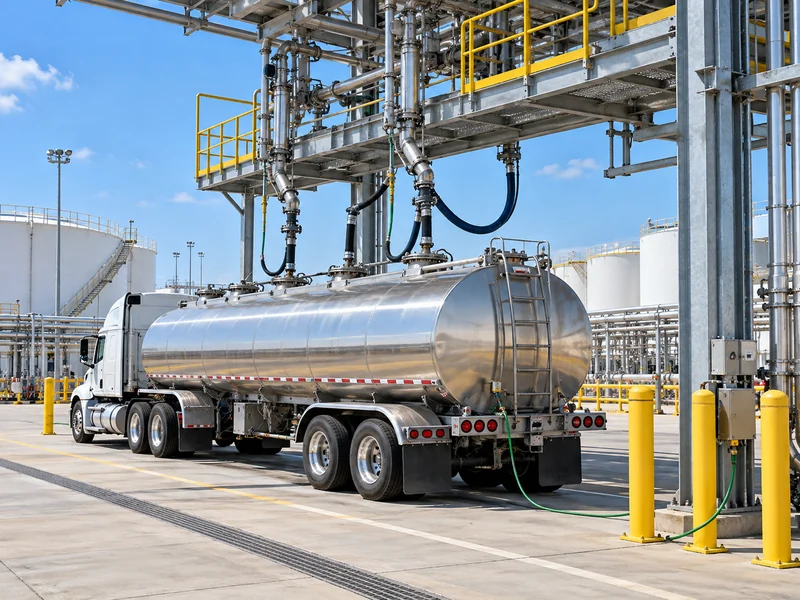
Loading rules also interact with compartment design. Each compartment must be loaded with a vapor space instead of being filled to the brim. Industry practice for gasoline tanks leaves a minimum of about 3% of each compartment empty so the fuel has room to expand. That outage requirement is one reason spec sheets quote compartment volumes as nominal capacities that are never fully used in practice.
The practical compliance point for buyers is to treat compartments, baffles, and certification as one system. A tank can have the right number of compartments and still fall short if the certification, valves, and loading provisions do not match the products and the jurisdiction. The safer sequence is to specify the products first and let the compartment and compliance requirements follow.
Inspecting and Maintaining Compartment Baffles
Compartment integrity depends on the welds and openings staying sound, so any inspection looks at where those internal walls meet the shell. Weld condition is one variable to watch: baffles and bulkheads are welded to the tank shell. A cracked weld can matter because a failed baffle no longer controls surge and a failed bulkhead can let products cross-contaminate. One check is a visual look at the weld lines and plate edges through the manhole, following whatever inspection schedule applies to the tank and jurisdiction.
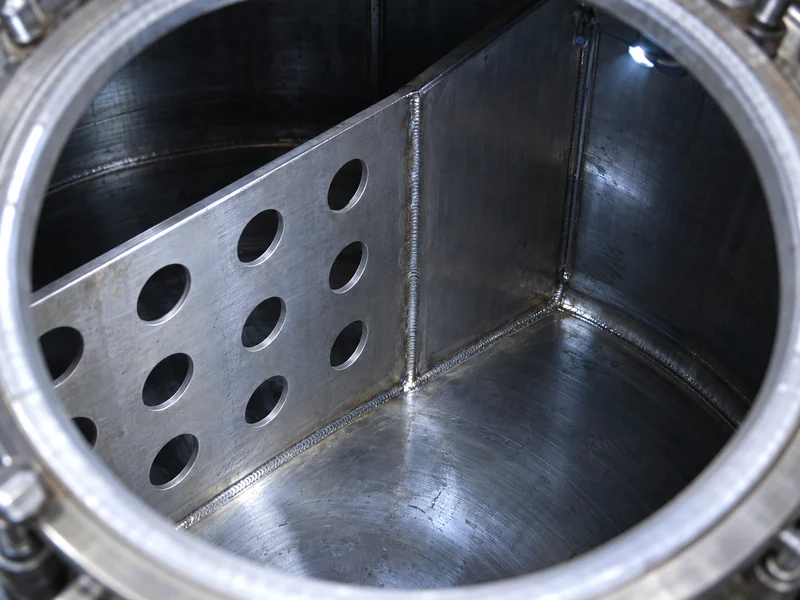
Blocked flow holes are another variable. A baffle works only while its perforations stay clear, so debris or product residue that clogs the holes can reduce the anti-surge effect the baffle is meant to provide. The check is to confirm the openings are clear before assuming so. Leakage is a third thing to watch. A compromised bulkhead can show up as product appearing in the wrong compartment or as external seepage, and catching it early is cheaper than a contaminated load. Operators who want a structured routine can follow a dedicated procedure for detecting leaks on HOWO tanker trucks instead of relying on ad-hoc checks.
A short buyer and operator checklist keeps the compartment system honest:
- Confirm the exact compartment count and per-compartment volumes on the build sheet, not only the total capacity.
- Check that baffle and bulkhead welds are sound and flow holes are clear as part of the tank’s regular inspection routine.
- Match tank certification, valves, and outage provisions to the specific products and the destination jurisdiction.
Conclusion
The core thing to understand about HOWO fuel tanker compartments is that they are a deliberate trade-off, not a bigger-is-better feature. Compartments let one truck carry several fuel grades and, together with baffles, keep partial loads stable through the high-risk mid-fill range. But each bulkhead, valve, and vapor space adds cost and reduces the flexibility of a single large volume. The point most often misread is that a baffle and a bulkhead are interchangeable. They are not: only a bulkhead makes a true separate product compartment, while a baffle merely tames sloshing within one.
For anyone specifying a unit, the useful sequence is to fix the products and jurisdiction first, let those determine compartment count, volumes, and certification, and then confirm the build details in writing. If you are weighing HOWO configurations for a specific fuel-distribution route, our team can help you match compartment layout and capacity to the products you actually carry.
FAQ
Do all HOWO fuel tankers have the same number of compartments?
No. Compartment count is a build option that varies by model and order, not a single fixed number. Documented HOWO configurations include three- and four-compartment tanks, and gasoline tankers in general commonly use four or five, so confirm the exact count and per-compartment volumes on the build sheet for the unit you are specifying.
What is the difference between a baffle and a bulkhead?
A bulkhead is a liquid-tight wall that creates a separate product compartment, while a baffle is a perforated, non-liquid-tight plate that only slows sloshing inside a compartment. Under 49 CFR 178.320 the two are defined distinctly, and the practical result is that compartment count is set by bulkheads and ride stability by baffles.
Can one HOWO fuel tanker carry different fuels at the same time?
Yes, provided the tank is built with multiple compartments, because each liquid-tight compartment holds its product independently with its own fill and discharge points. This is the main commercial reason for splitting a fuel tanker, letting a single truck deliver diesel and multiple gasoline grades on one run.
Do more compartments make a fuel tanker safer?
More compartments and baffles reduce sloshing by breaking up the liquid’s travel, which helps stability, but the number should follow the products you carry, not be maximized for its own sake. Each added bulkhead raises cost and cuts usable single-product volume, so the safe choice is the layout that matches your actual load, verified with sound welds and clear baffle holes.
Further Reading
- 49 CFR 178.320 — General requirements for DOT specification cargo tanks — U.S. regulation (T1). Source of the baffle and bulkhead definitions used above; applies to DOT-specification cargo tank motor vehicles operated in the United States.
- A Comprehensive Guide to DOT 406, 407, 412 and MC-331 Tanker Trailers — industry reference (T2). Supports the DOT 406 material, pressure, and capacity context for flammable-liquid tankers; U.S.-focused specifications.
- Fuel Tanker Baffle Design: Types, Functions & Selection Guide — industry technical guide (T2). Supports the baffle open-area range and fill-level surge points; treat specific figures as configuration-dependent.